This is one of 6 trails which have been set up in and around Ilkley. The downloadable information is excellent, complete with helpful illustrations; this is the second one we have done.
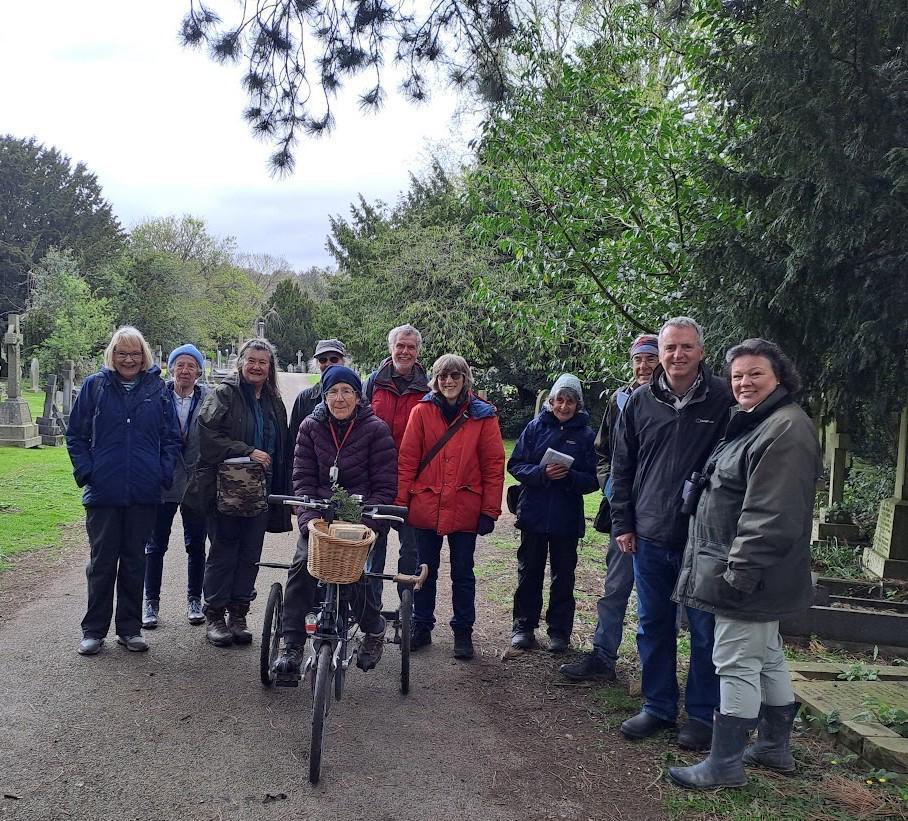
11 of us met at the gates, clutching our printed copies of the trail with 37 described trees. We had barely set foot in the gate before tree No.1 was found immediately adjacent and easily identified as Small-leaved Lime, recognisable as a lime by the single large red bud scale which was just falling off. Because of the time of year, the state of the trees was intermediate between bud and leaf, which sometimes made identifying features quite difficult – in this case it was hard to see comparison points with the other two main lime species, Common and Large-leaved.
Some familiar woodland trees – Ash, Horse Chestnut, Sycamore, Holly – followed in quick succession; Holly was almost completely lacking in prickles, and the booklet explained that leaves out of the reach of herbivores have no prickles, since the prickles are costly in energy for the plants to produce. It also told us that Holly was grown in the past as fodder for livestock – it looks distinctly unpalatable!
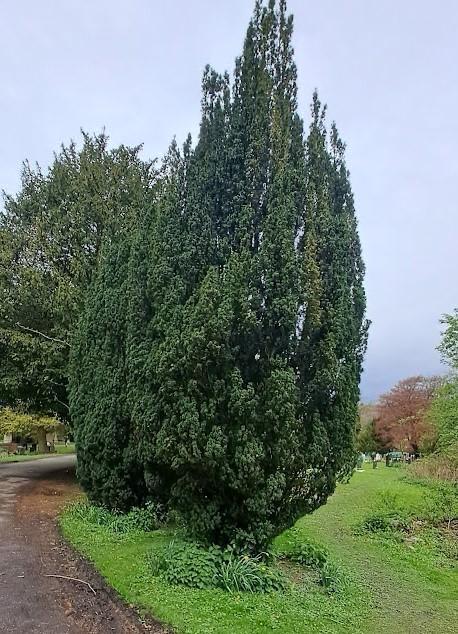
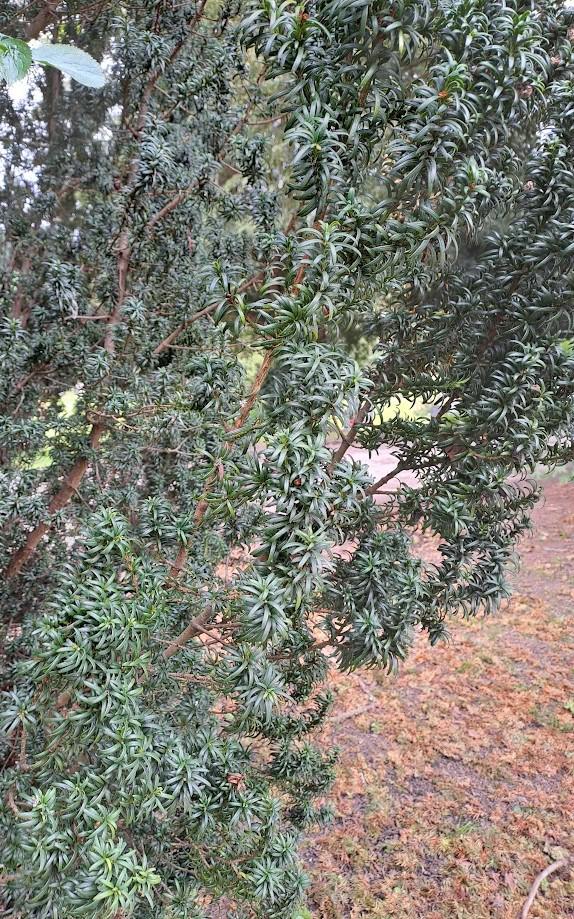
Next followed an interesting comparison between Common Yew and Irish Yew; the latter, a sterile mutant, forms a more conical bush with upward-pointing branches and the leaves are arranged all around the stem instead of in one plane. (See photos). Most of us did not know this already and it was interesting to spot the two different types as we progressed around the cemetery, which contained a lot of Yews!
So far, so good – but now we began to meet conifers, always frequent in cemeteries, and the identification became very difficult, partly because the positioning of the trees on the map was not really accurate. Somehow there were Western Red Cedar, Lawson’s Cyprus and Nootka, and although the booklet gave many helpful tips, the foliage of the three was almost indistinguishable. We were expected to decide whether the crushed leaves smelled of parsley, pineapple or lemons, and whether the spray felt rough (Nootka) when stroked backwards or smooth (Western Red Cedar).
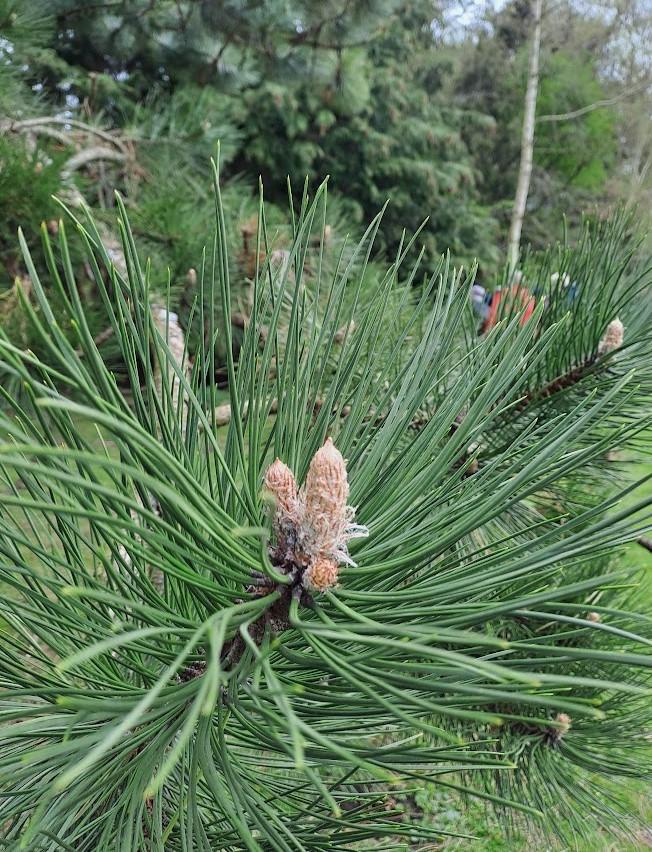
Sadder and wiser, we proceeded past Common Lime, Copper Beech and Elder – all straightforward, and then met a magnificent Bishop Pine with pairs of long leathery needles in great tufts. A young Aspen was surprisingly still entirely in closed bud, then a good opportunity came to compare Silver and Downy birch. (One helpful feature generally was that many of the trees were young and their foliage, flowers and fruit could easily be accessed from the ground, for examination).
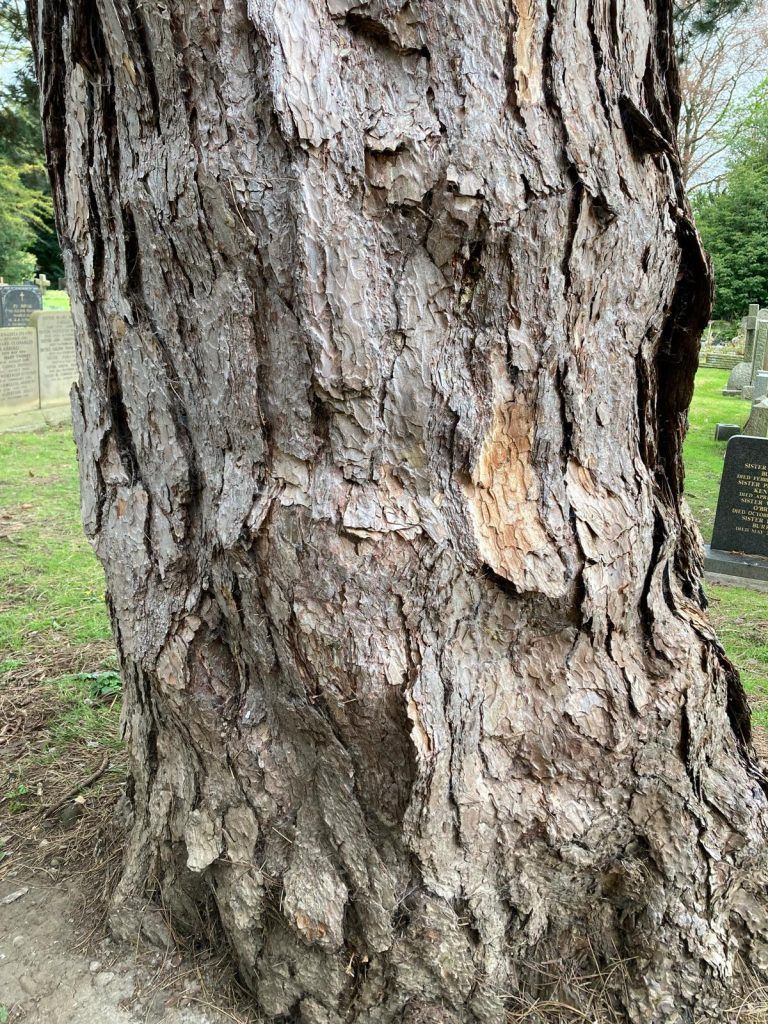
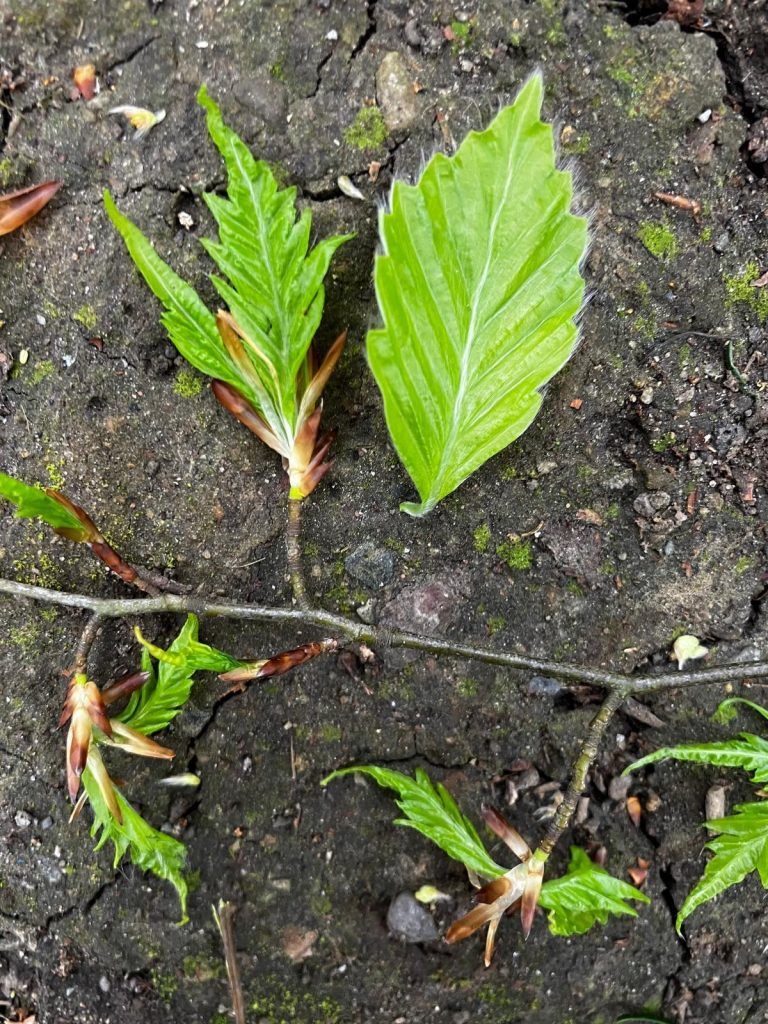
More well-known trees followed, then a Gingko which was unremarkable since the leaves had not yet opened. After some more well-known hedgerow trees, we came upon two magnificent Fern-leaved Beech. The booklet explained that this is a “chimera” i.e. a mixture of two cell types, the core being those of Common Beech wrapped in a thin skin of mutant cells. Parts of the tree which are damaged will revert to the typical beech. We were able to find leaves of both kind – see photos. The mutant leaves were certainly graceful and decorative. The final tree was a large Corsican pine, with impressively long needles and deeply furrowed bark.
At the end of the trail we felt we had learnt a lot and we’d certainly had an enjoyable tour;many thanks to Kerry for researching the trail, and compliments to the various contributors who constructed it!
Muff Upsall