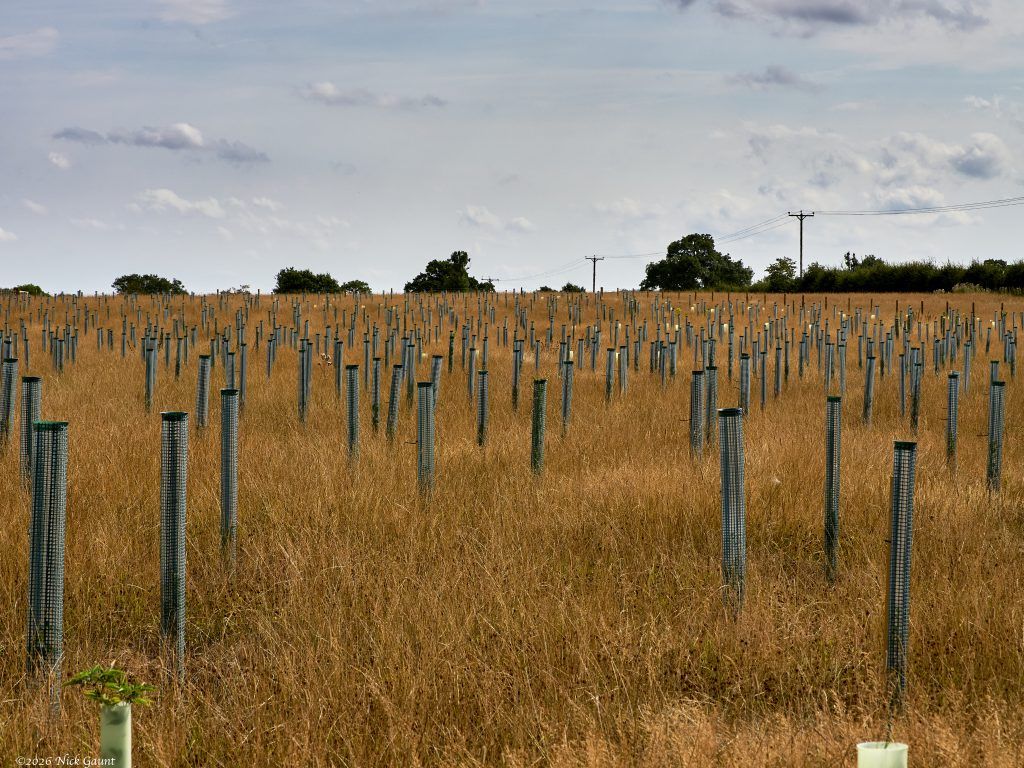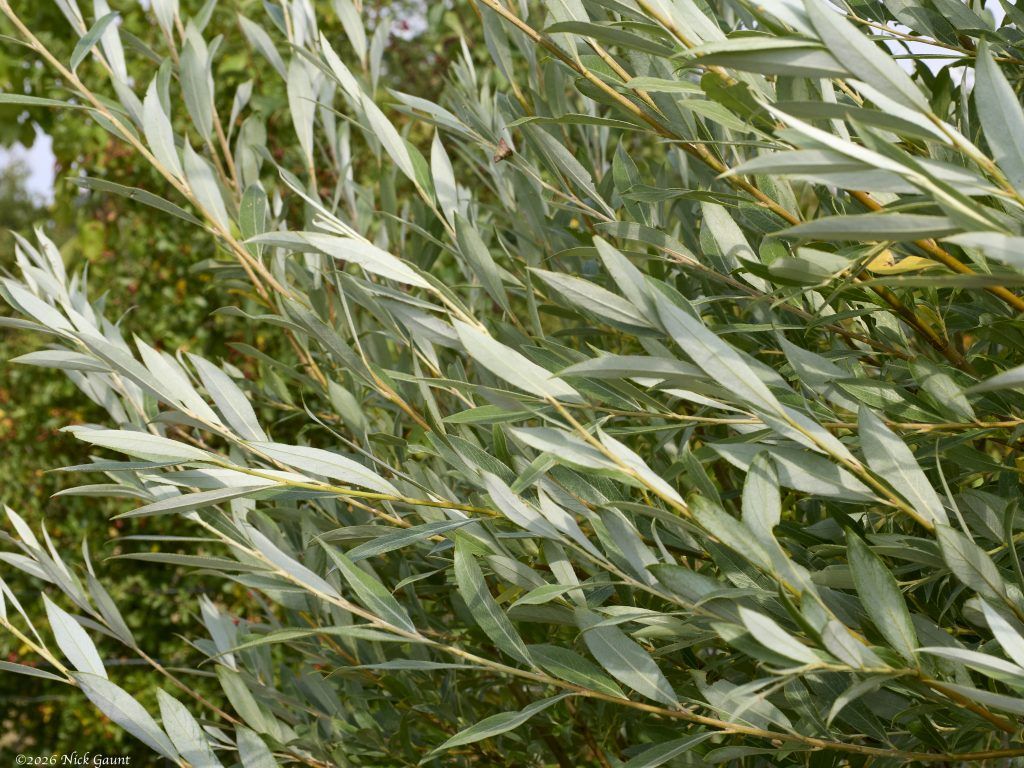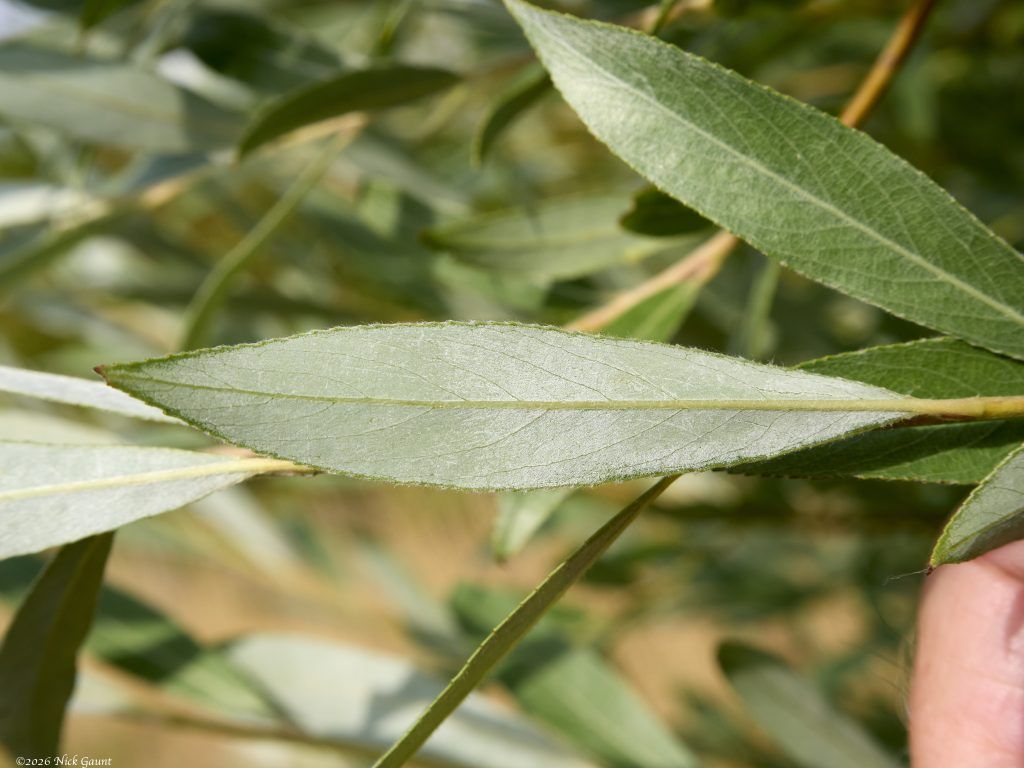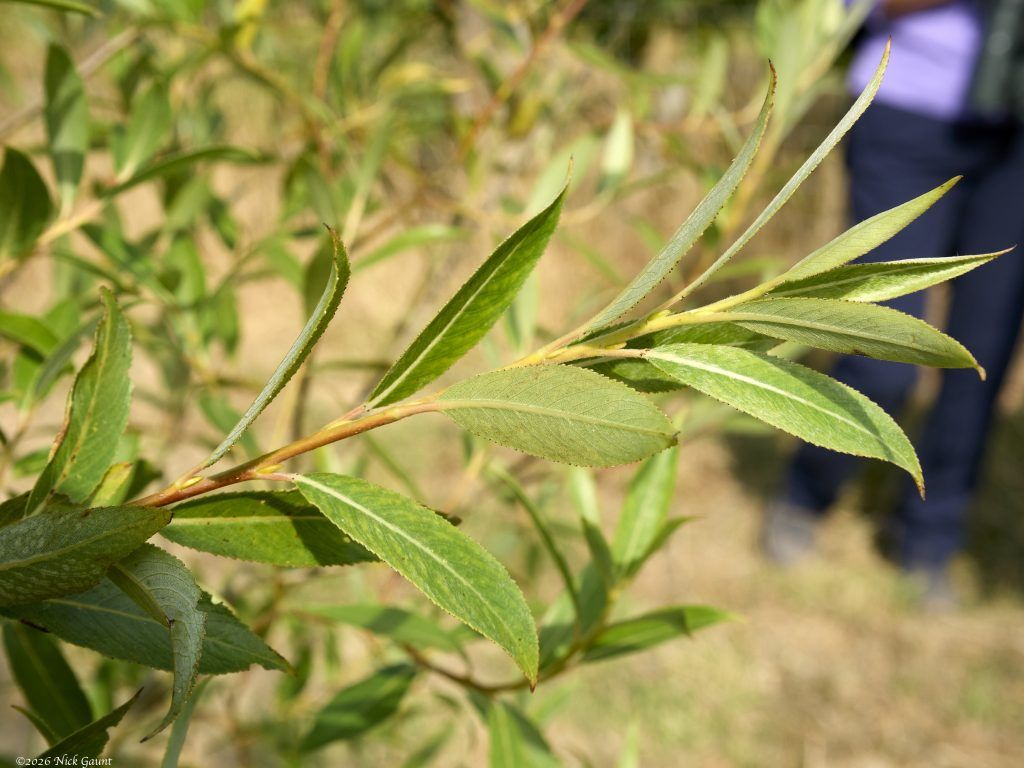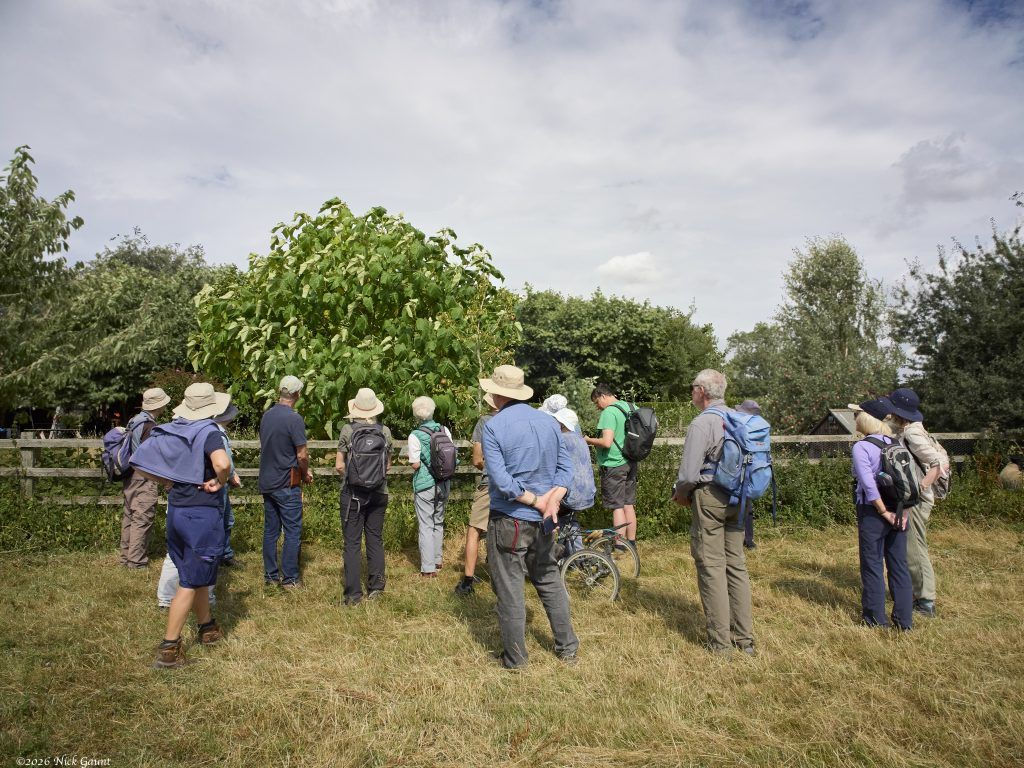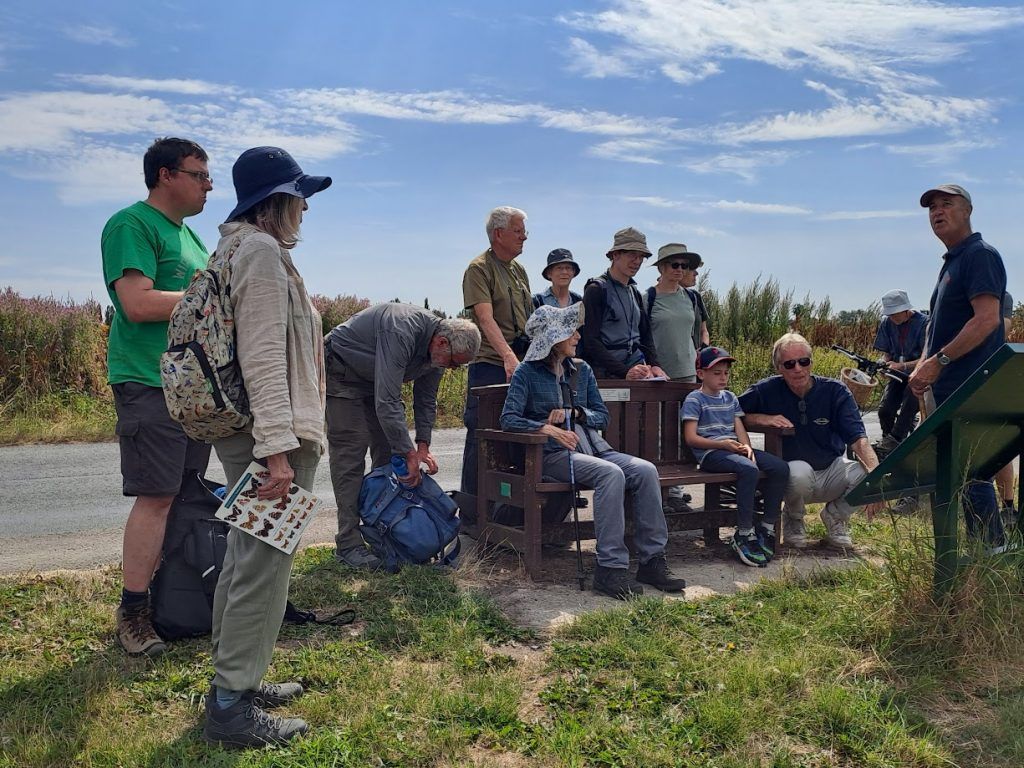
The aim of this trip on a warm, dry morning was to learn about the recent initiative to establish a nature reserve on the south-eastern edge of the village of Great Ouseburn which is on the eastern side of the Harrogate District between the A1 and the River Ure. Our host for the day was Graeme Jackson, one of the key people involved in the project. Its site, Townend Field, was his childhood playground as his grandfather and then his father were the tenant farmers.
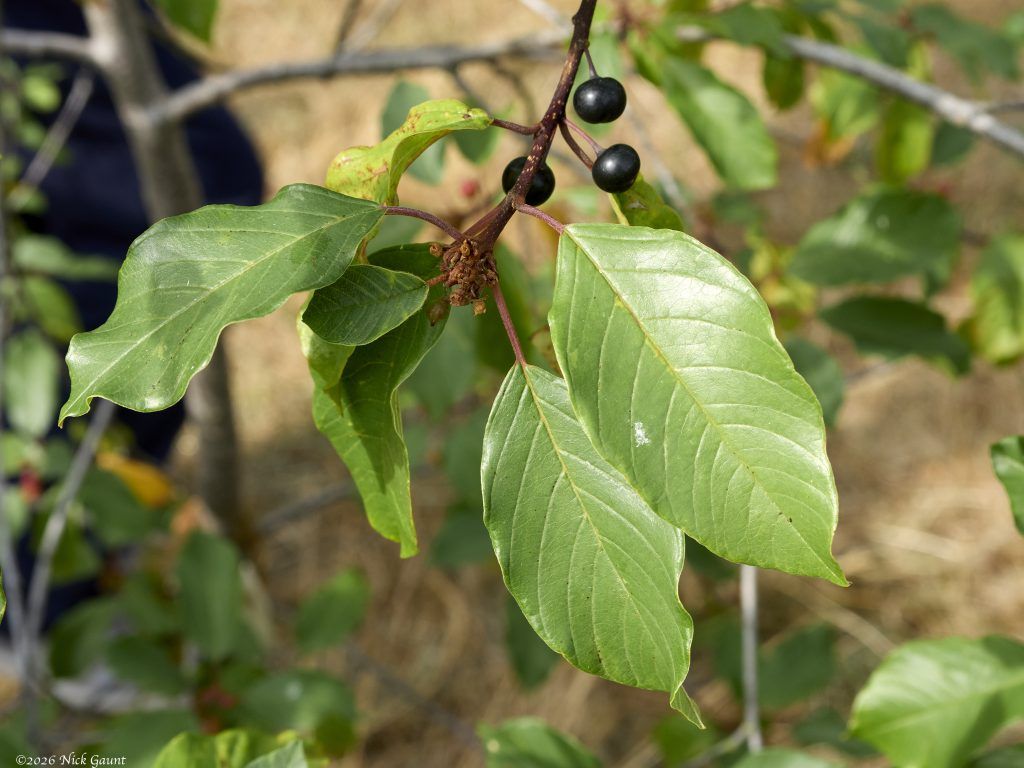
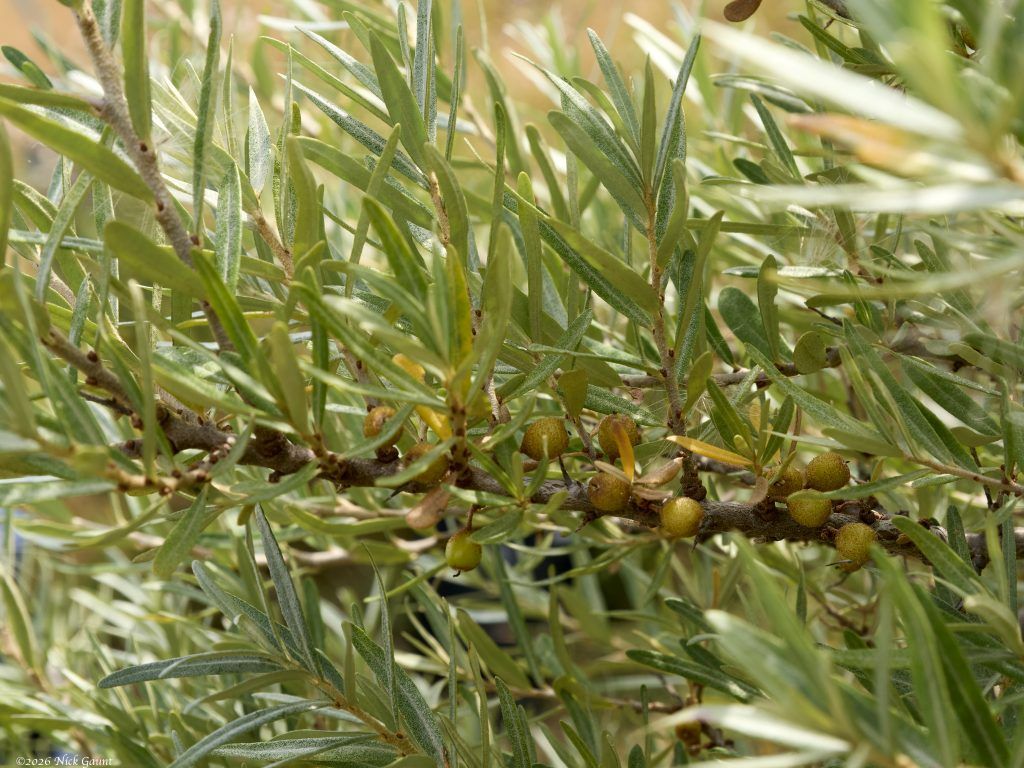
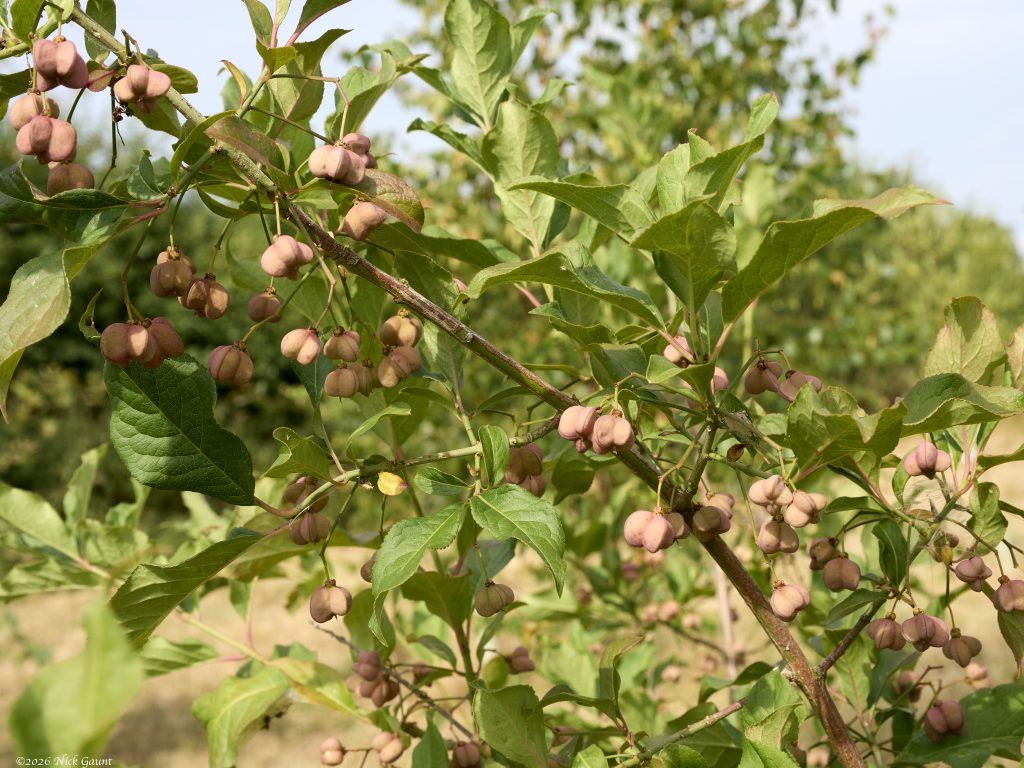
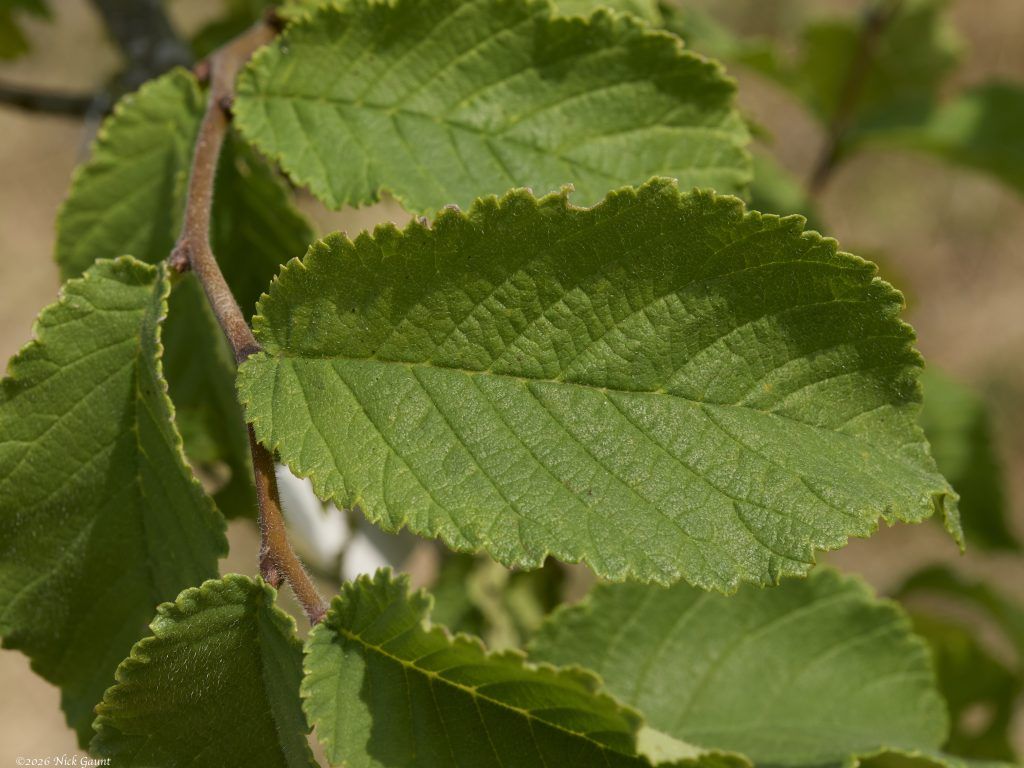
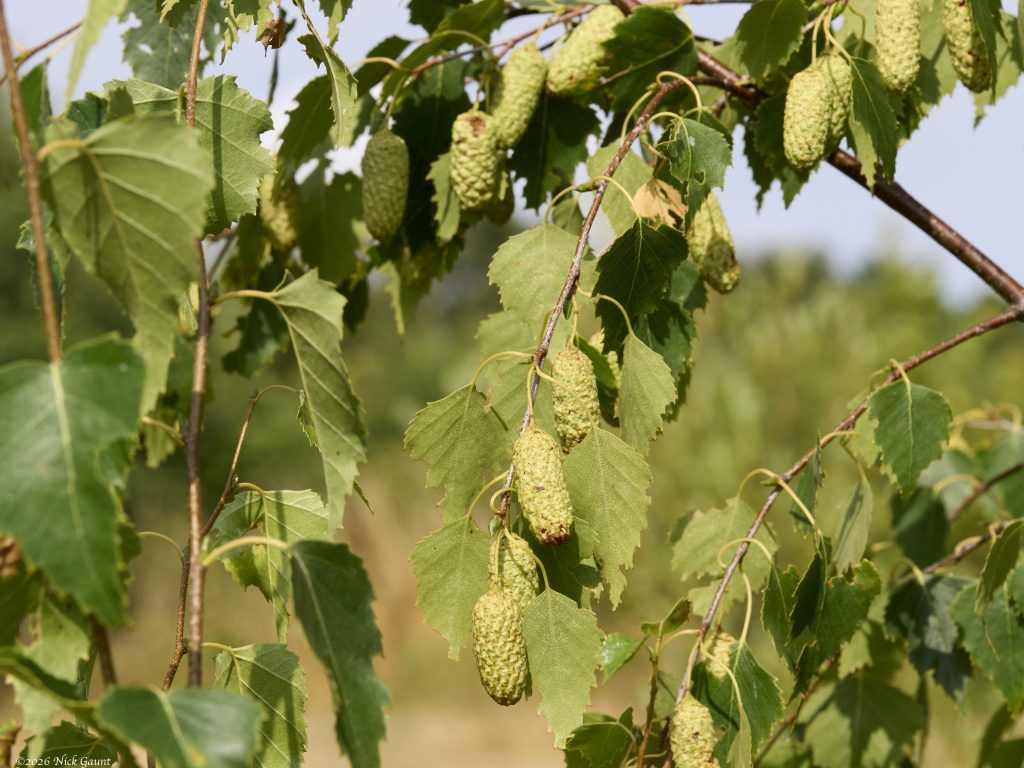
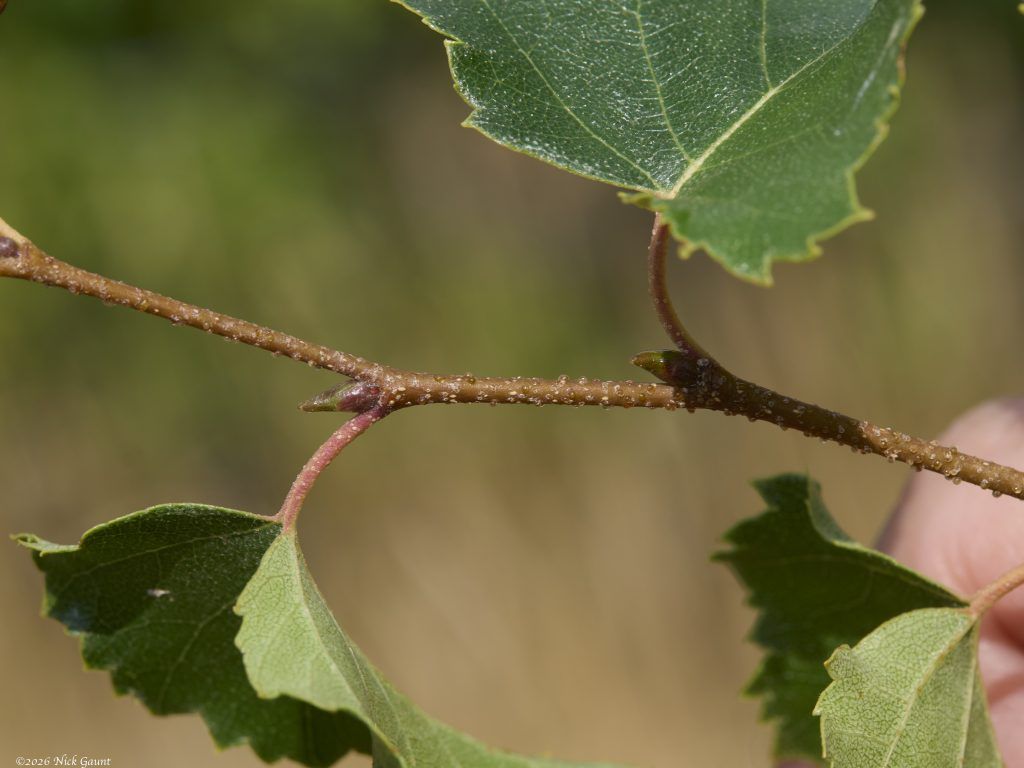
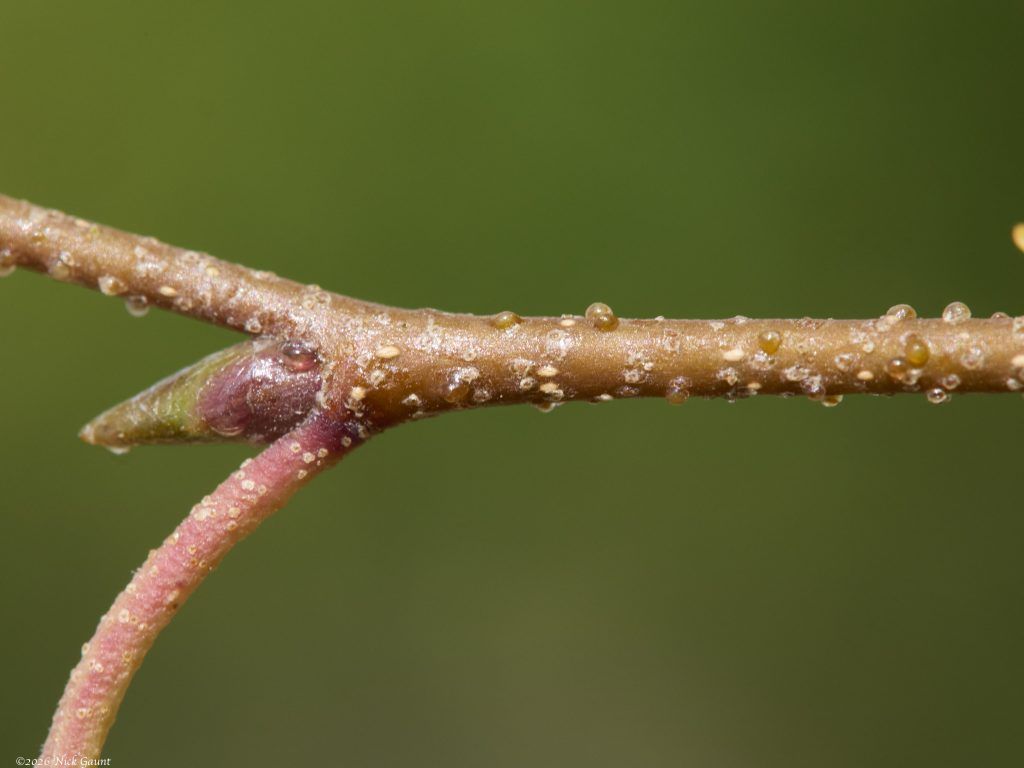
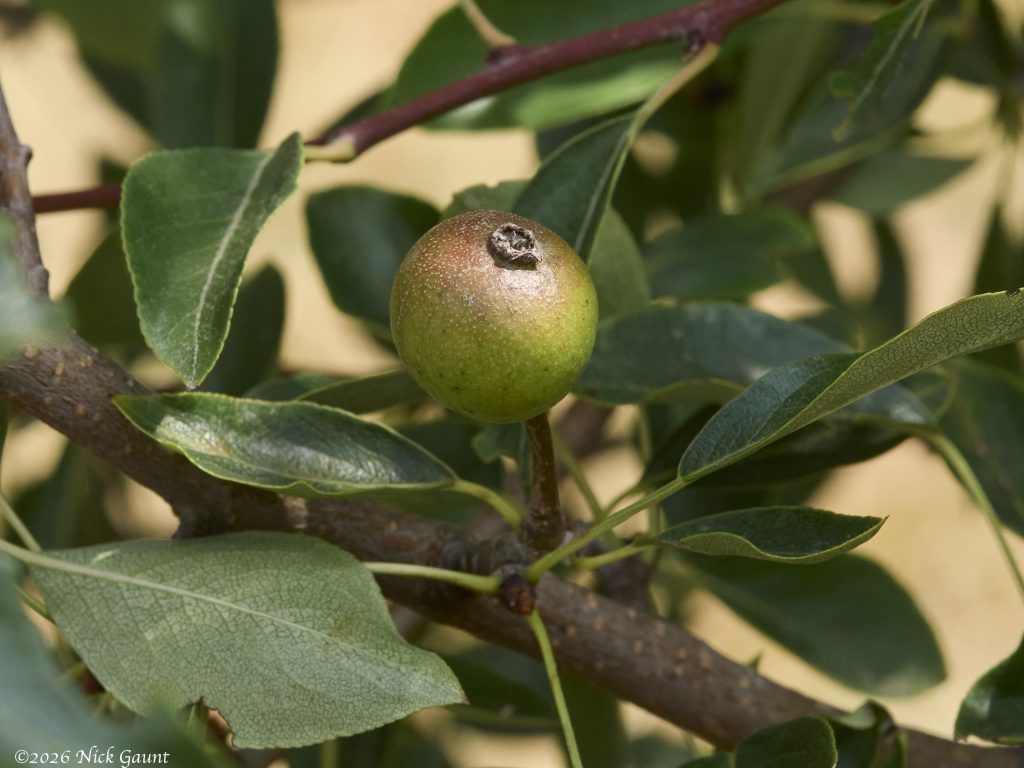
Before going onto the reserve, Graeme invited us onto his own land across the road where he is aiming to create a collection of as many as possible of Britain’s native trees. As we walked round, we were encouraged to try to identify them and shared tips on key features to look for. The chance to compare similar species was particularly useful; for example most people could recognise a birch but distinguishing Downy Betula pubescens from Silver Birch B. pendula was trickier. Less familiar to many of us and surprisingly different from each other were Common (or Purging) Rhamnus cathartica and Alder Buckthorn Frangula alnus. A particularly unusual specimen was Plymouth Pear Pyrus cordata with small roundish brown fruits.
At Townend Field we were joined by a couple of Graeme’s colleagues and he explained that when it came up for sale in 2024 people from the village and elsewhere had got together to raise the £275,000 needed to match the offer from a builder. The twenty acres is now owned by The Upper Ouse Conservation Trust which has four aims: safeguarding the land as a sanctuary for wildlife; community engagement through access and participation; educational use by the adjacent village school; and protecting landscape character. The latter had been appreciated by Anne Brontë who had sketched the view across to Little Ouseburn church when she worked as a governess nearby.
The reserve covers the area between the road and the Ouse Gill Beck. A smaller watercourse known as the Second Strand flows through it and the land near their confluence is known as The Island. Despite the dry summer the prevalence of Common Reed Phragmites australis and various rushes including patches of Sharp-flowered Rush Juncus acutiflorus indicated that most of the land is relatively damp. Towards the road there was a small lake until the 1960s and Graeme explained that the Trust would like to re-establish some standing water habitat.
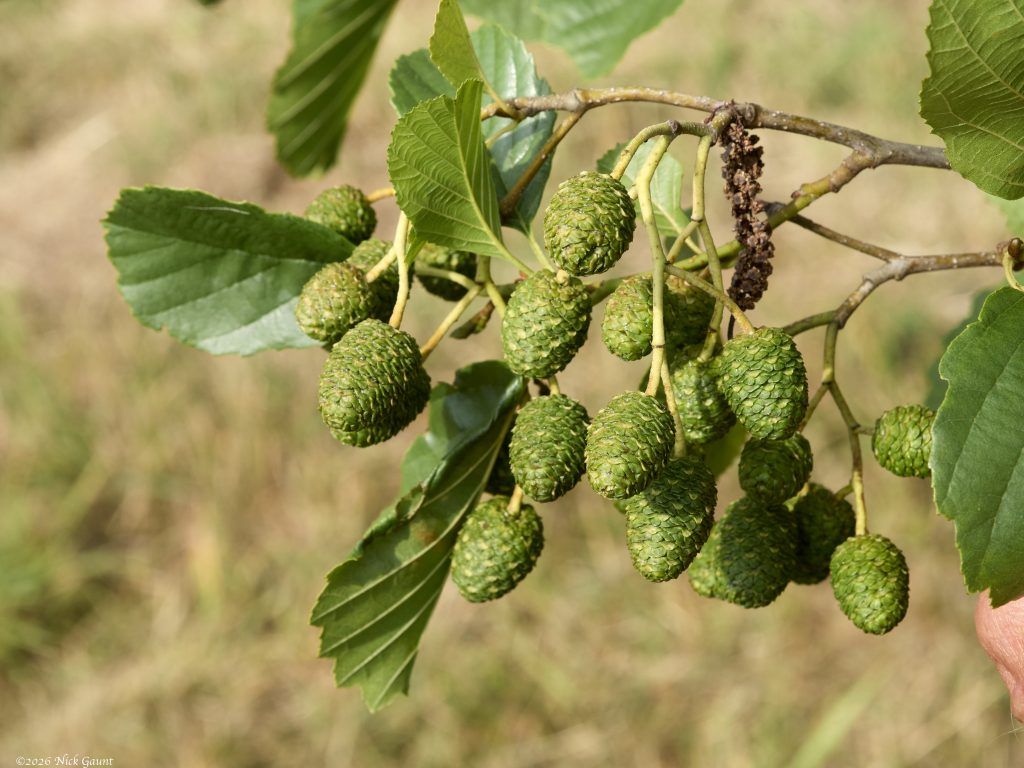
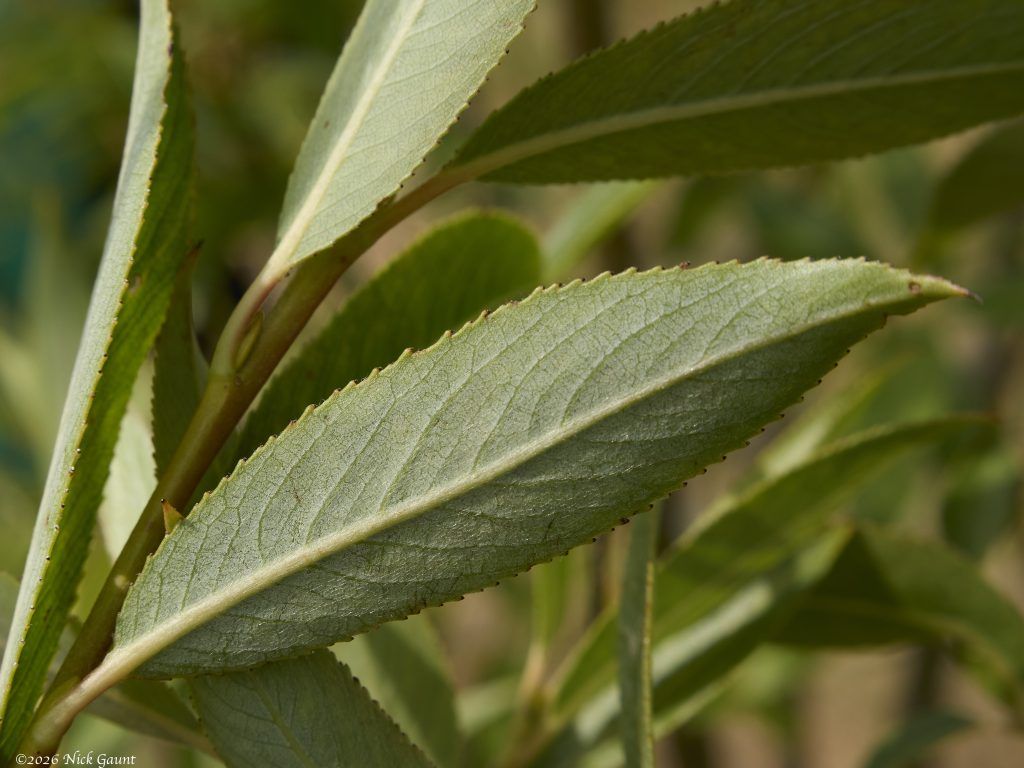
We followed a path named after Dame Judi Dench, who helped with publicity for the project, passing several impressive clumps of Greater Tussock-sedge Carex paniculata before reaching an area dominated by some very large Alder Alnus glutinosa trees. Several of these have been reported as veteran or notable specimens. The scrub includes a significant amount of Bay Willow Salix pentandra with glossy dark green upper surfaces to its leaves. At this time of year Wild Angelica Angelica sylvestris was flowering in many places. The much taller Hemlock Conium maculatum dominated in one area where Himalayan Balsam Impatiens glandulifera had been cleared. There is still plenty of the latter on the site but work parties are making efforts to remove it. When we looked in the ditches, a third umbellifer, Fool’s Watercress Helosciadium nodiflorum could be seen, perhaps not at its best in this dry year.
Graeme showed us a patch of Tansy Tanacetum vulgare which has been planted with a view to providing a site for the Tansy Beetle. Also with yellow flowers and forming a large patch was the garden escape Early Goldenrod Solidago gigantea. It was being visited by butterflies including Peacocks, Small Tortoiseshells and the Painted Ladies which have been so widespread this year. The birds were largely quiet during our visit but Graeme explained how sound and camera monitoring has revealed the remarkable number of species which visit including Common Crane and Spotted Crake.
In future they are considering introducing cattle with electronic collars which can be used to direct grazing activity to the most appropriate places. When Graeme was young, Water Voles abounded at the site and it would be good if a way to re-establish them could be found. Altogether a very worthwhile and promising project which is well worth visiting and supporting. Details can be found at https://uoct.org.uk.
Robin Blades