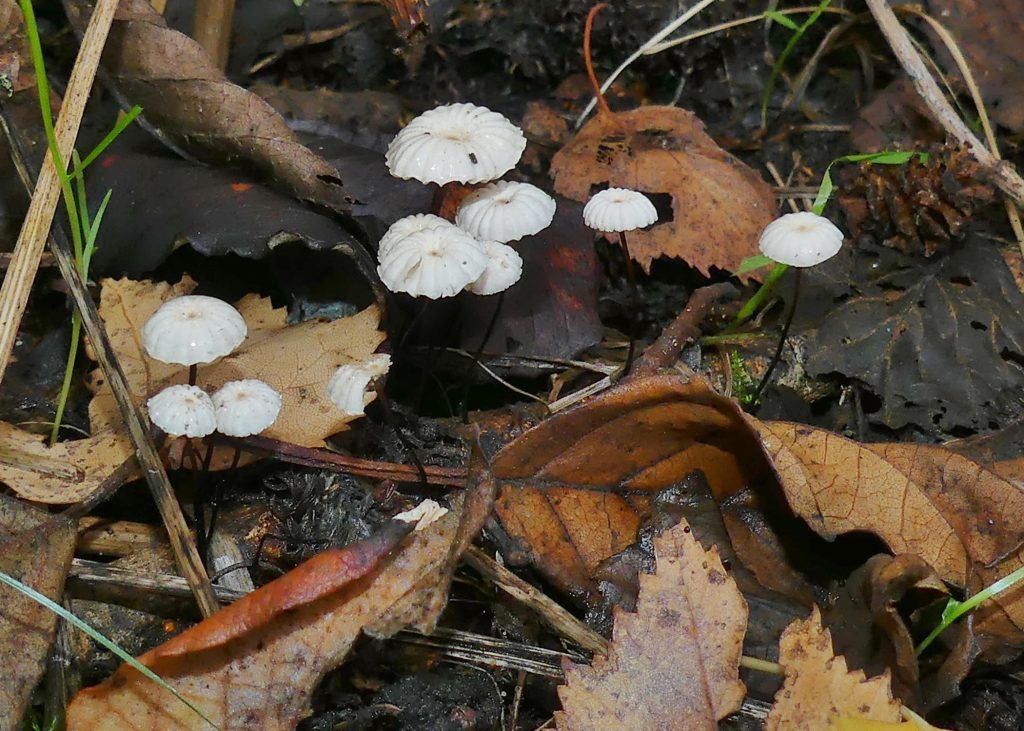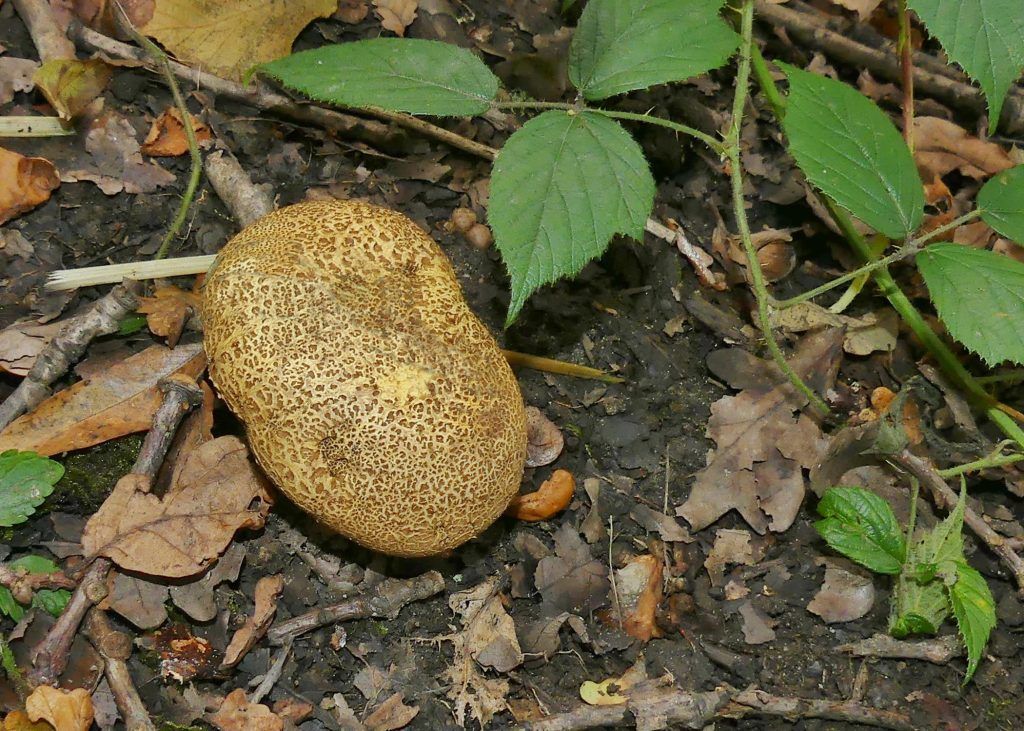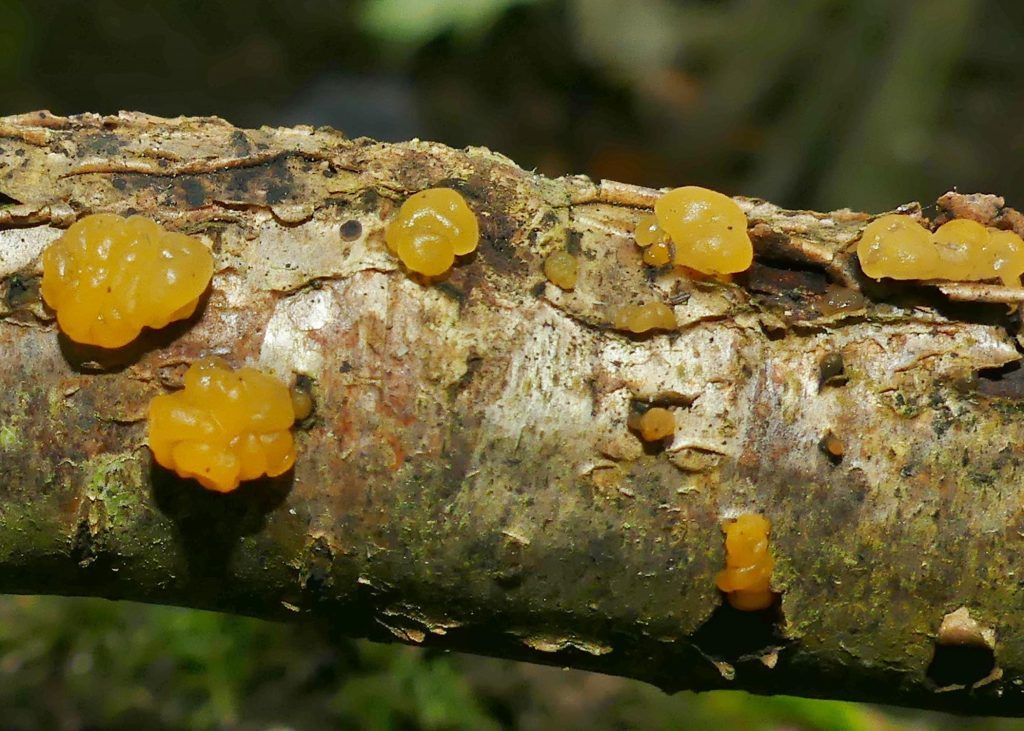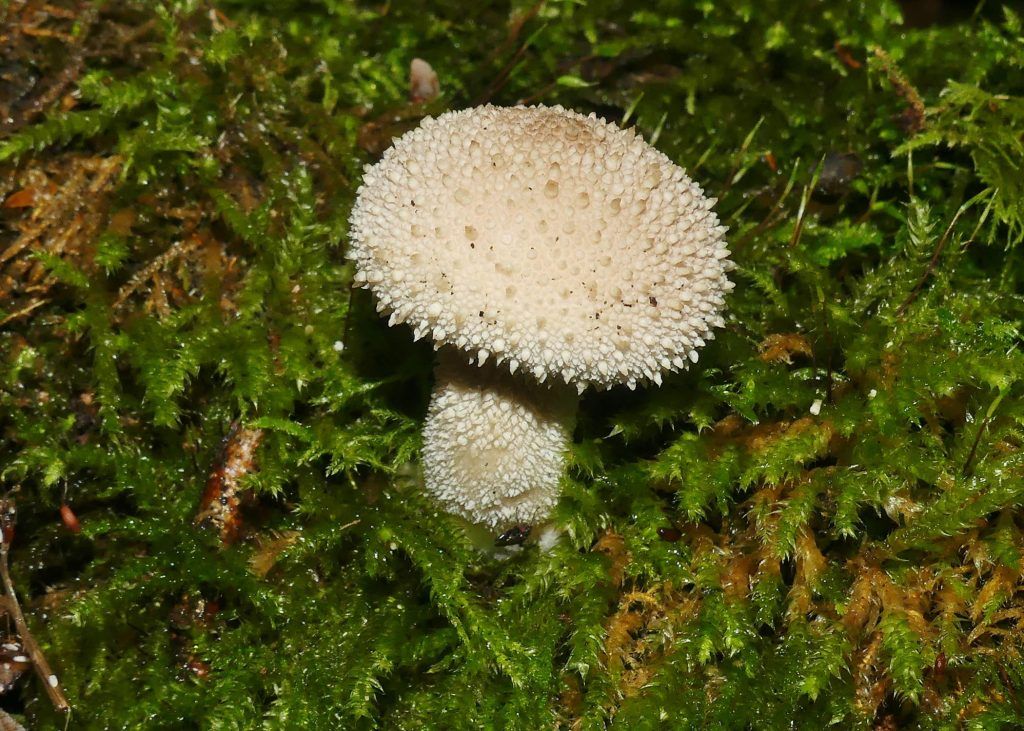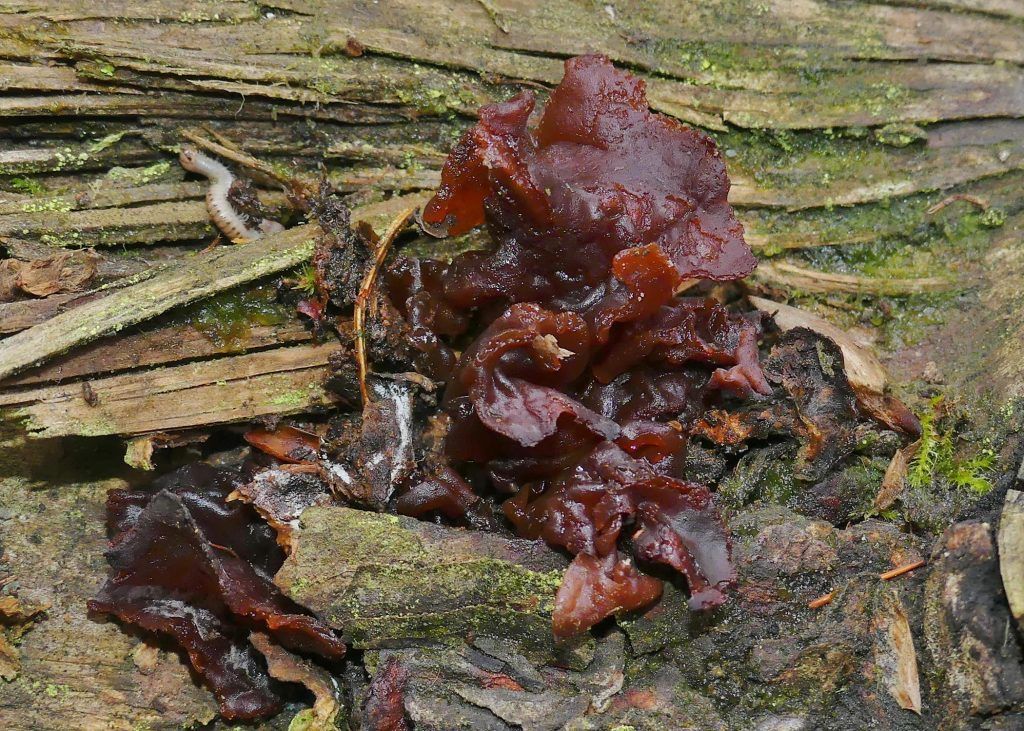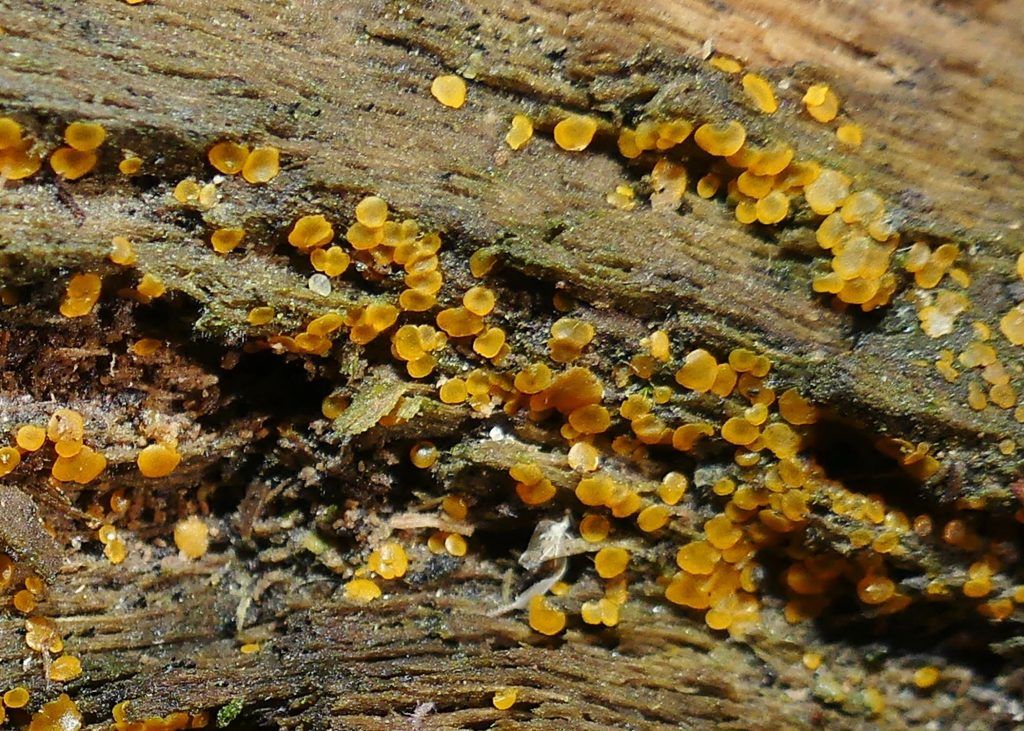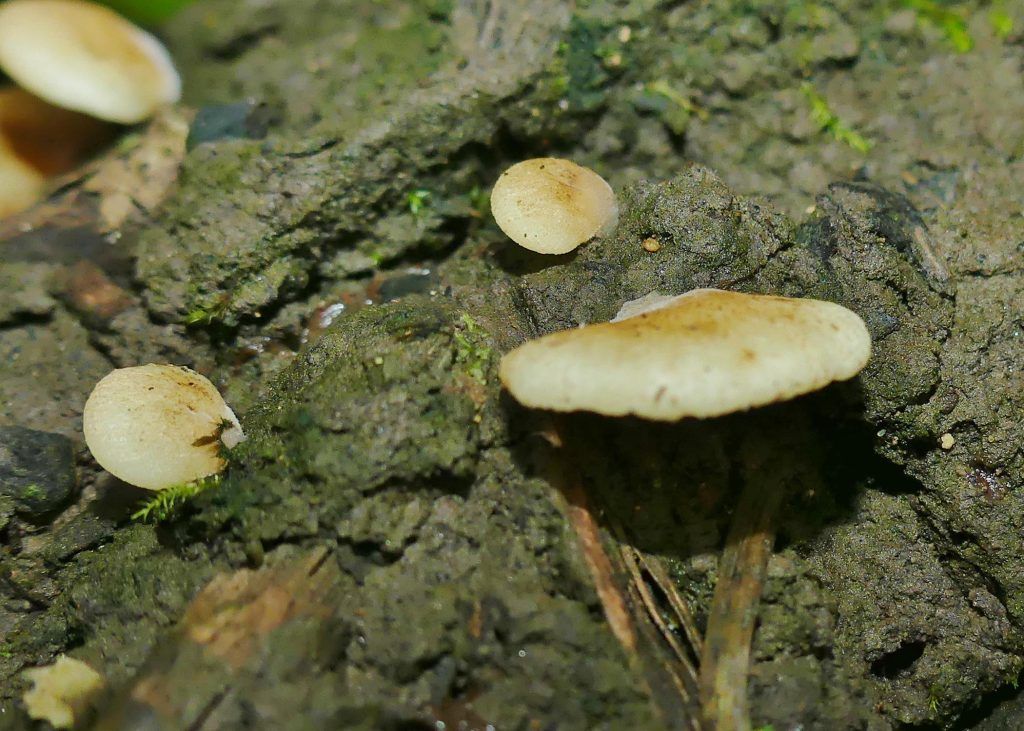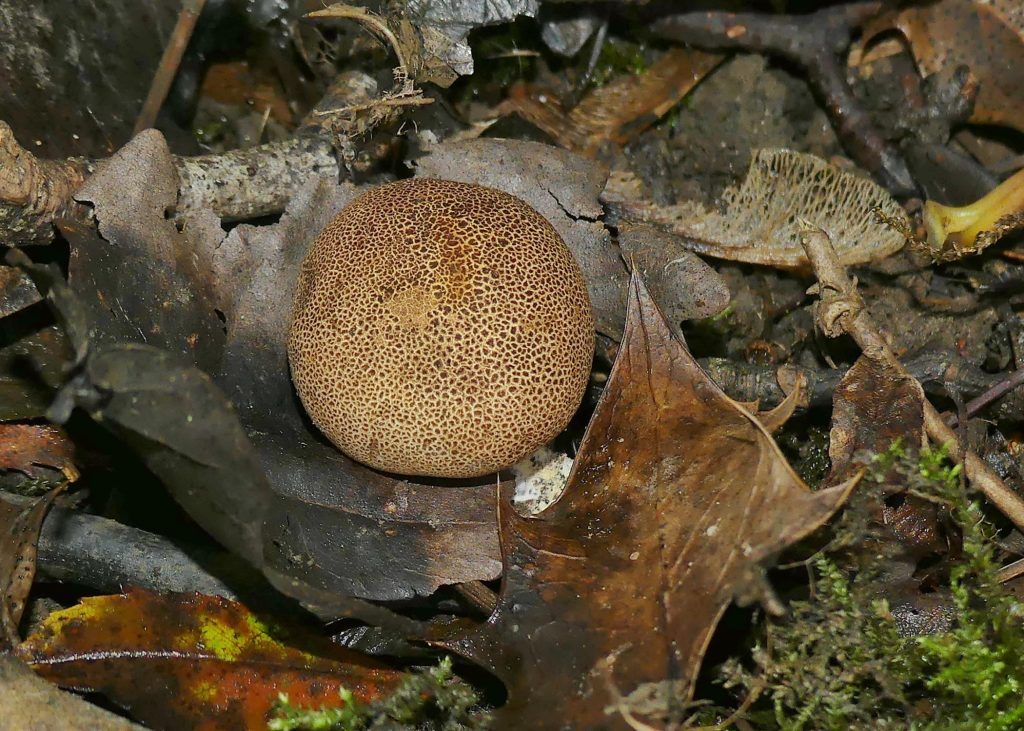
This was a day of finding fascinating fungi (mostly), with the additions of bright sunshine and blue sky overhead. Our leader was Andy Woodall who never stopped sharing his knowledge throughout the day. There seemed to be an interesting fact or a story related to most species we found. Needless to say, we did not manage to reach the spot he had planned for our lunch, but no matter.
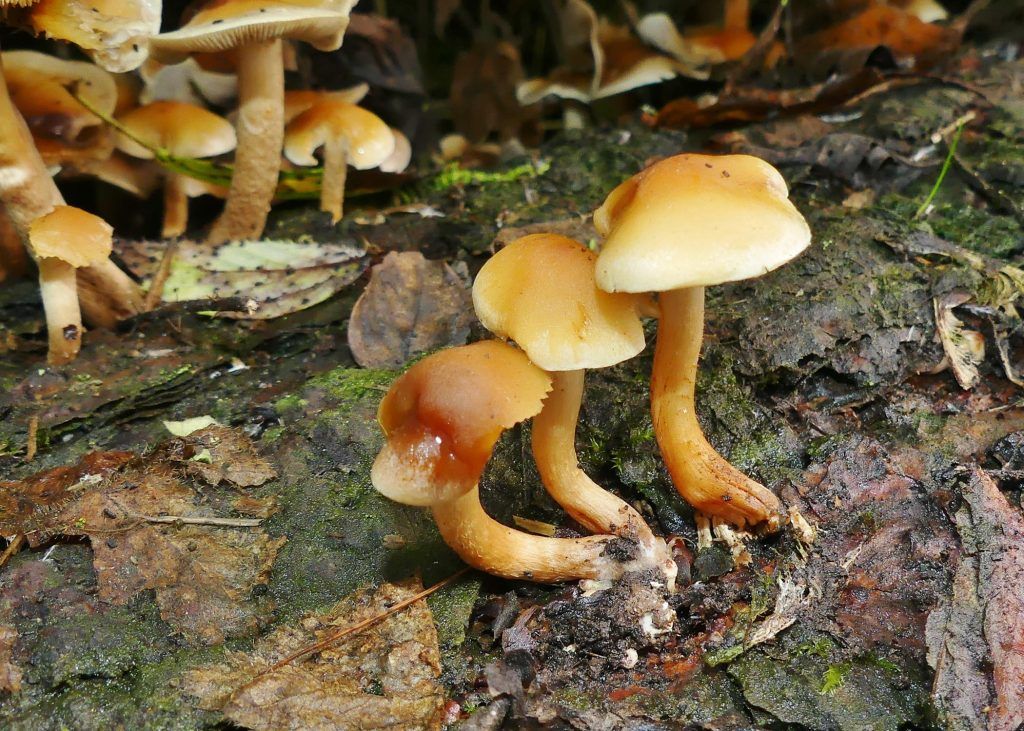
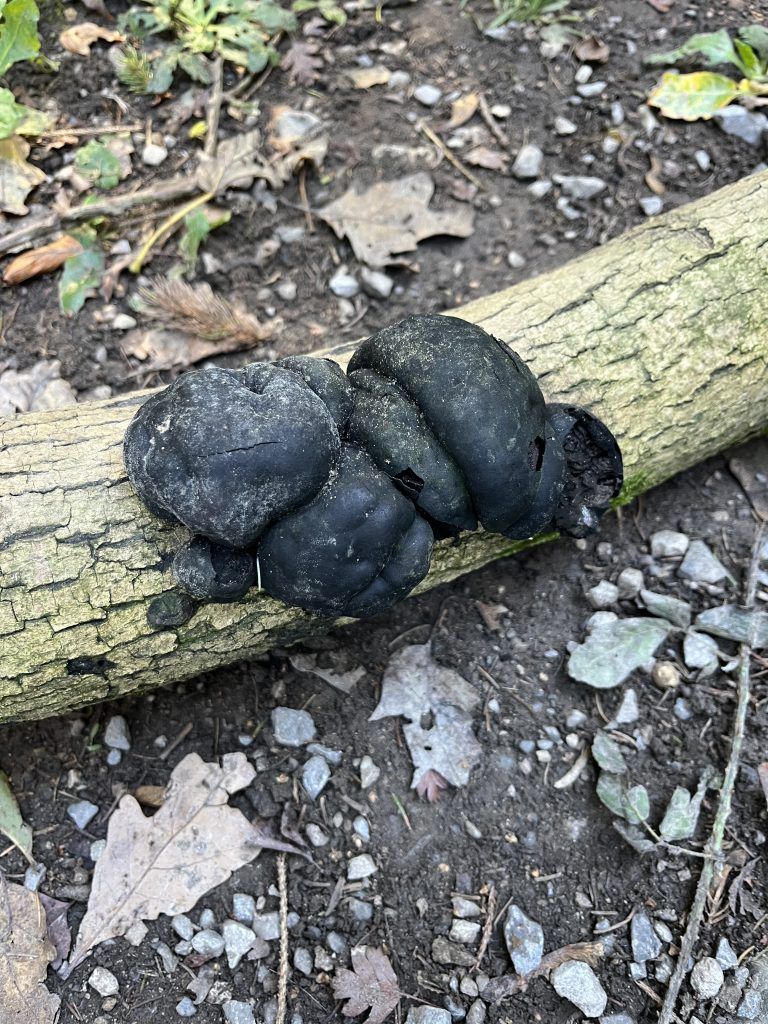
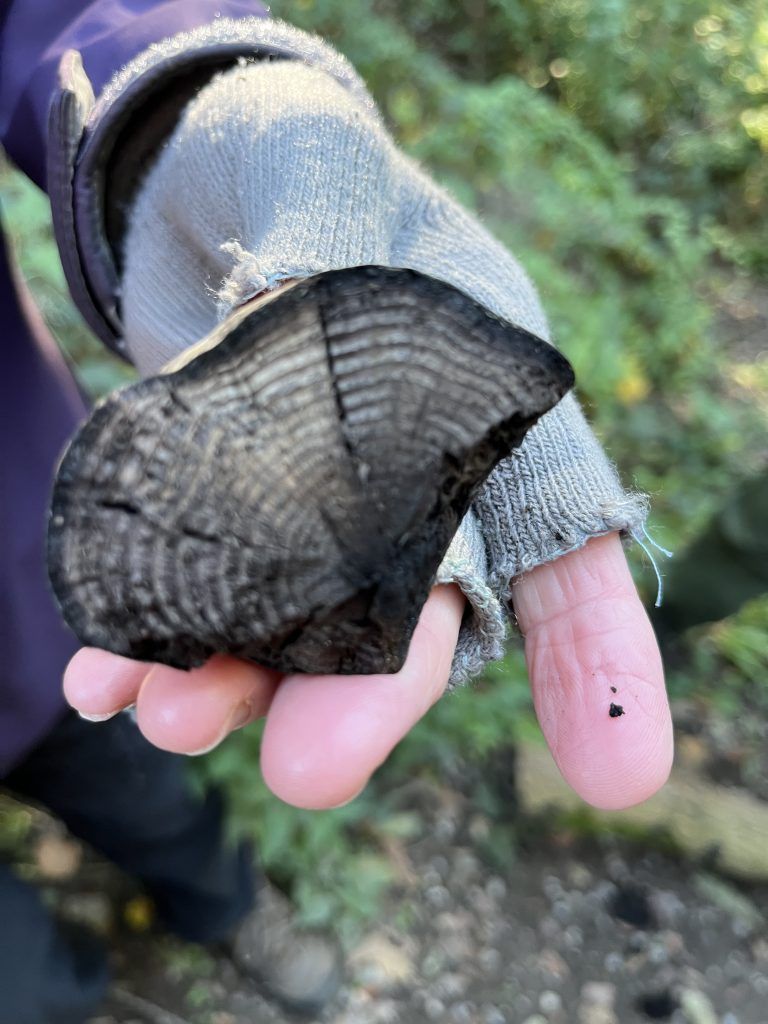
As we descended into the gorge from the car park, we were instructed to look for a horse chestnut tree (and we found out why later). Andy then wandered off into the undergrowth and reappeared with a branch covered with Cramp Balls or King Alfred’s Cakes. He explained that the rings showing inside this common fungus are growth rings, although the fungus is in fact an annual. The fungus resembles little burnt cakes and poor old Alfred has got the blame. I do think that this story is unfair on Alfred because after all, at the time he was probably very busy defending his kingdom. Another fungus that we frequently found during the day was the Sulphur Tuft, which often grows in dense clusters on stumps of deciduous and coniferous trees. This species can look very attractive, especially when Andy shines a UV torch on it to reveal its fluorescence.
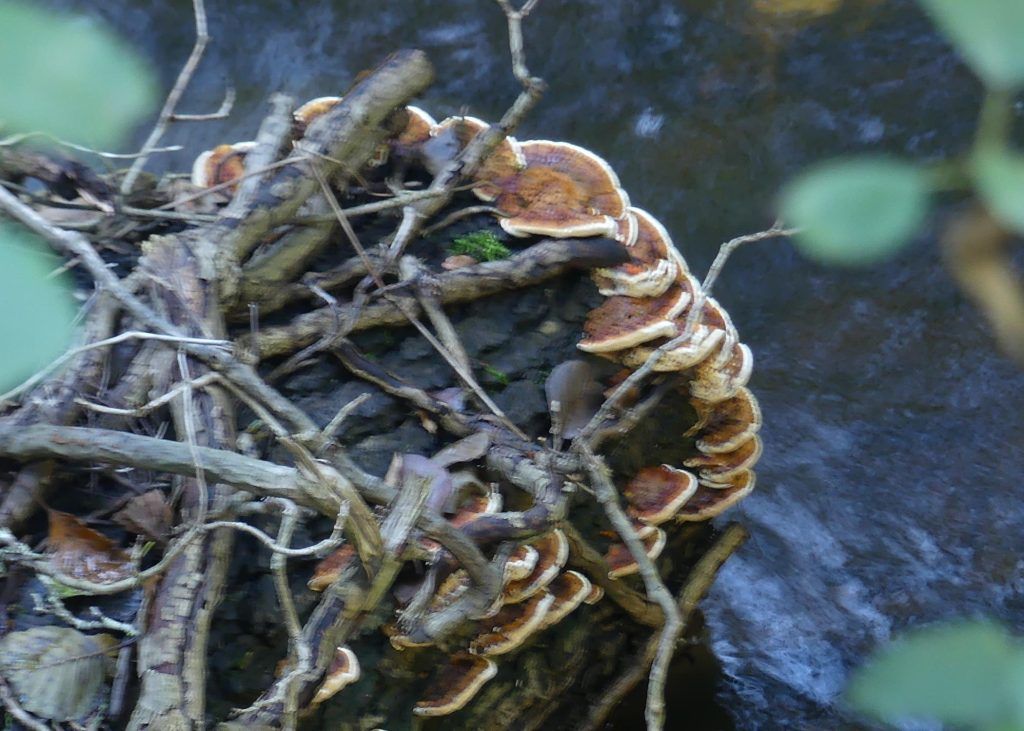
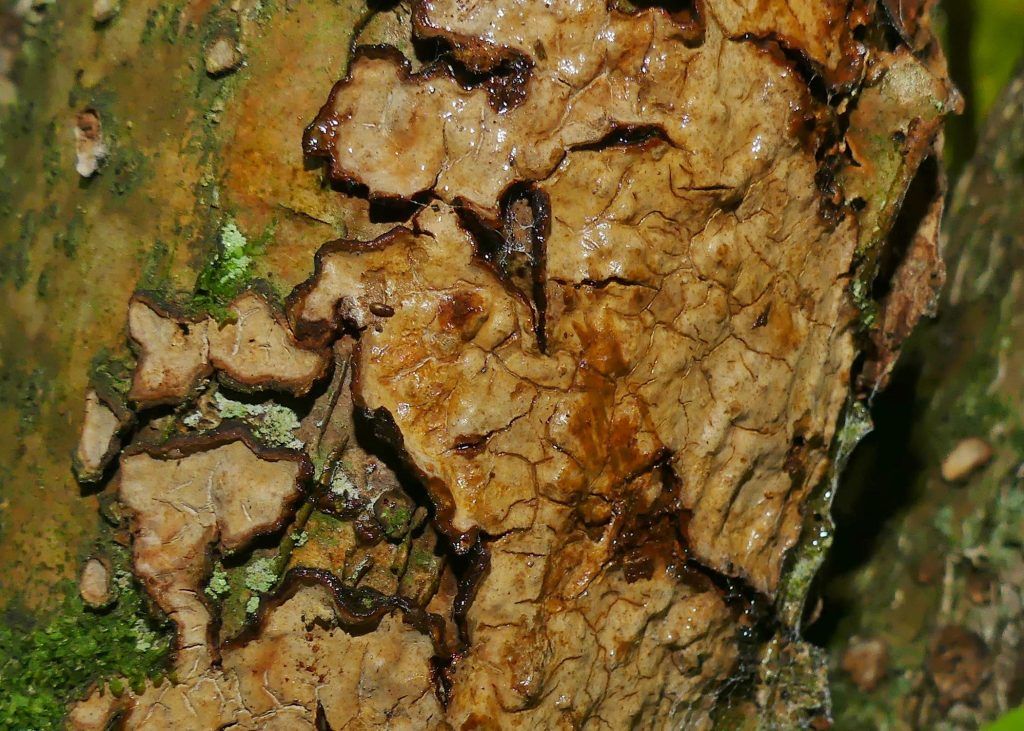
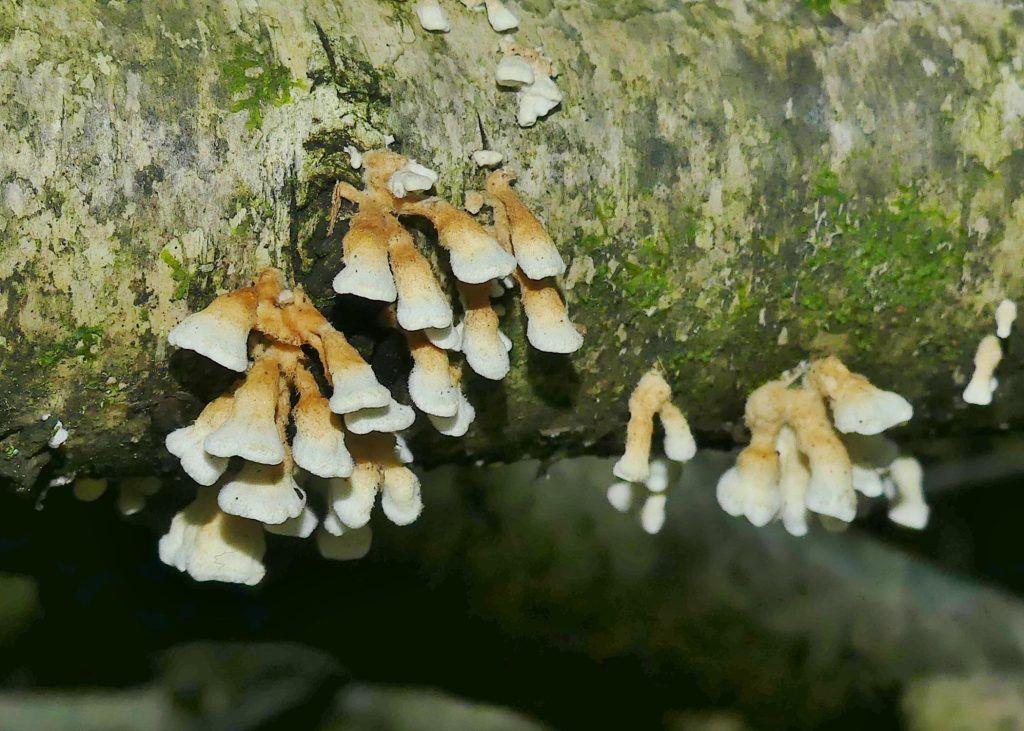
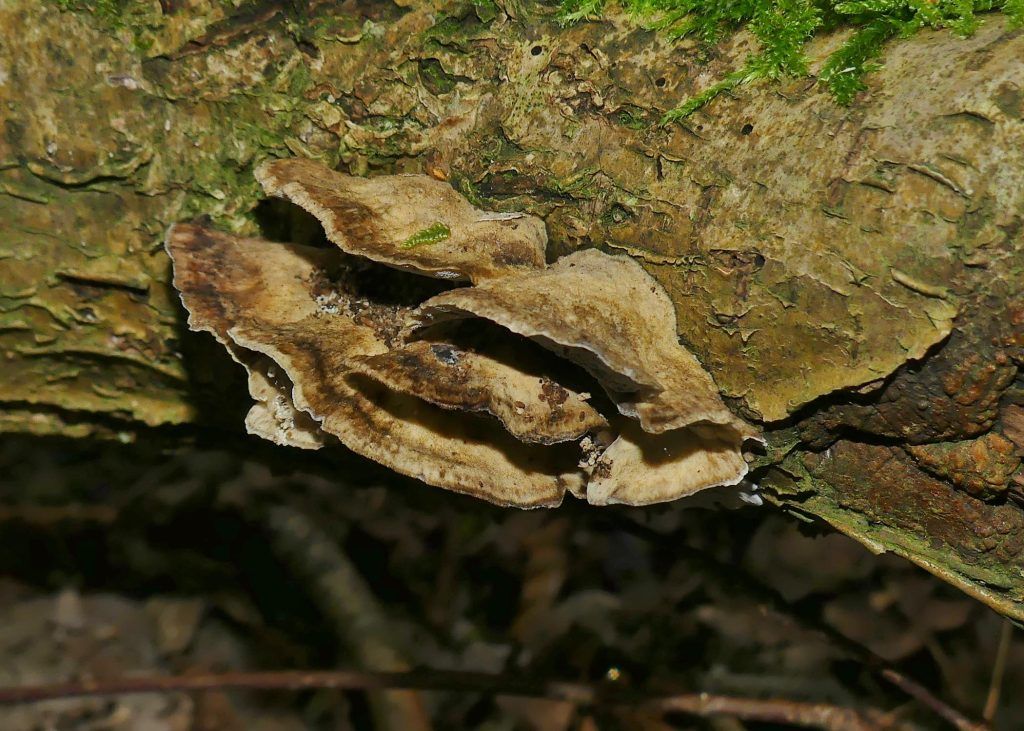
We found both the Artist’s Bracket with the galls of the Yellow Flat-footed Fly, and the False Artist’s Bracket. Apparently the Artist’s Bracket fungus is the only one in the UK that has galls specific to it. And as an example of how useful fungi can be, at one stage we were given a demonstration of how to make an Elastoplast. Just peel it off a Birch Polypore because this fungus includes an antibiotic which is active against certain bacteria!
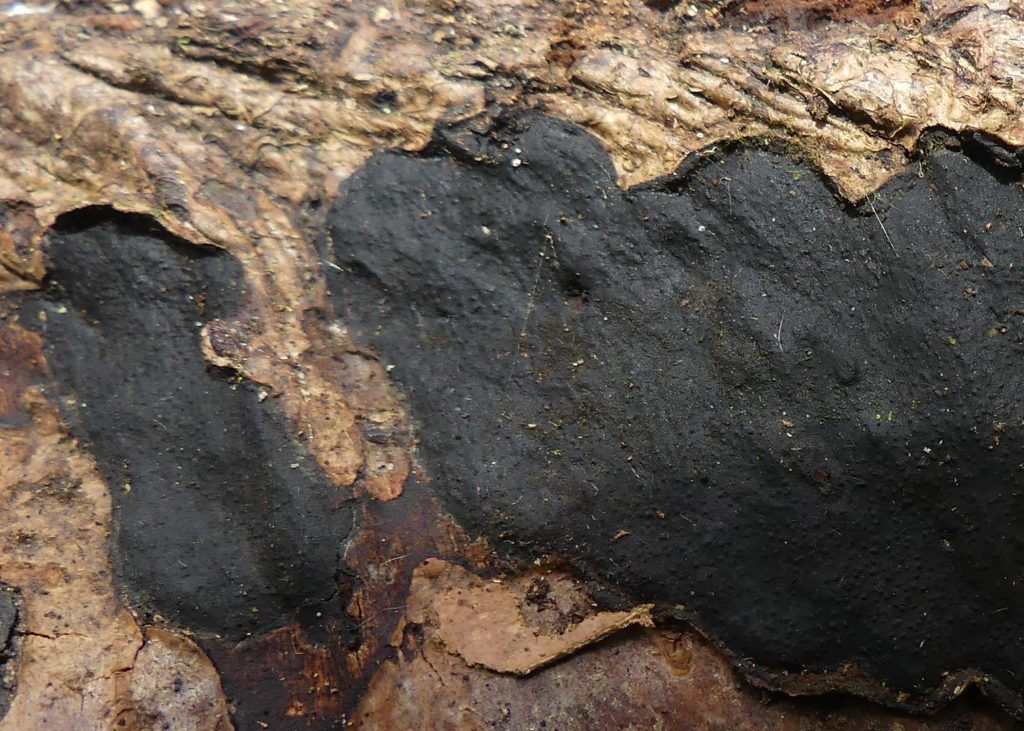
At the end of the day Andy informed us that the star fungus for him was the Giant Elm Bracket which is quite rare now after losing so many elms, although our species was growing on a birch tree. How can you pick a star fungus when every one is a star? Who would have thought that there is a Bluebell Speckle which grows on bluebells, is almost invisible to the naked eye and is perhaps an important decomposer of bluebells? Or that the Tar Spot fungus produces plant hormones which make the area around the sycamore leaf greener to improve its own nutrition? Or that a Bolete Eater with such a ‘poetic’ name, manifests itself initially on bolete species as a white mould-like flush which then turns a lurid yellow and is then followed by a third spore phase?
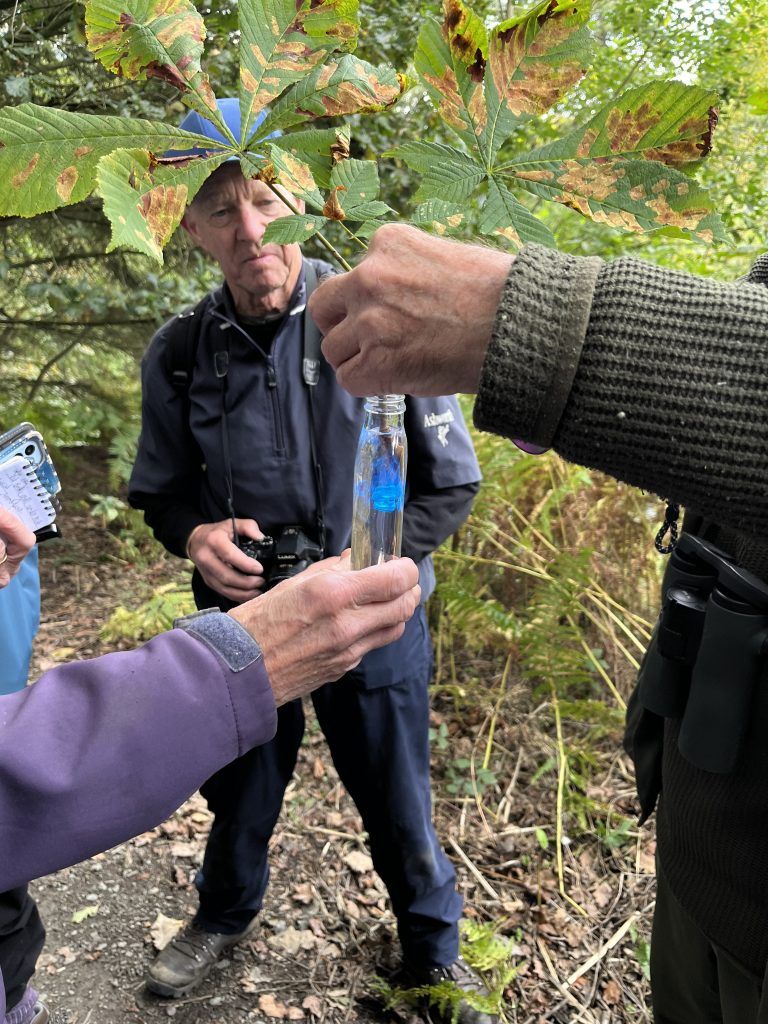
At last we found a Horse Chestnut tree and then the reason why we had been searching for it! The Horse Chestnut tree contains aesculin which fluoresces a bright blue under ultraviolet light. So guess what? Andy performed his ‘party trick’ with his UV torch on a small branch cut from the tree. The inside certainly showed as bright blue. Apparently the aesculin acts as a deterrent for insects, although bees seem to be unaffected.
Amongst the many, many other species we found, we came across the Hoof Fungus, which mostly grows on birches. In one instance the tree must have fallen over and it was very interesting to see that the fungus was then able to reorientate itself in order to keep its tubes vertical and allow its spores to drop.
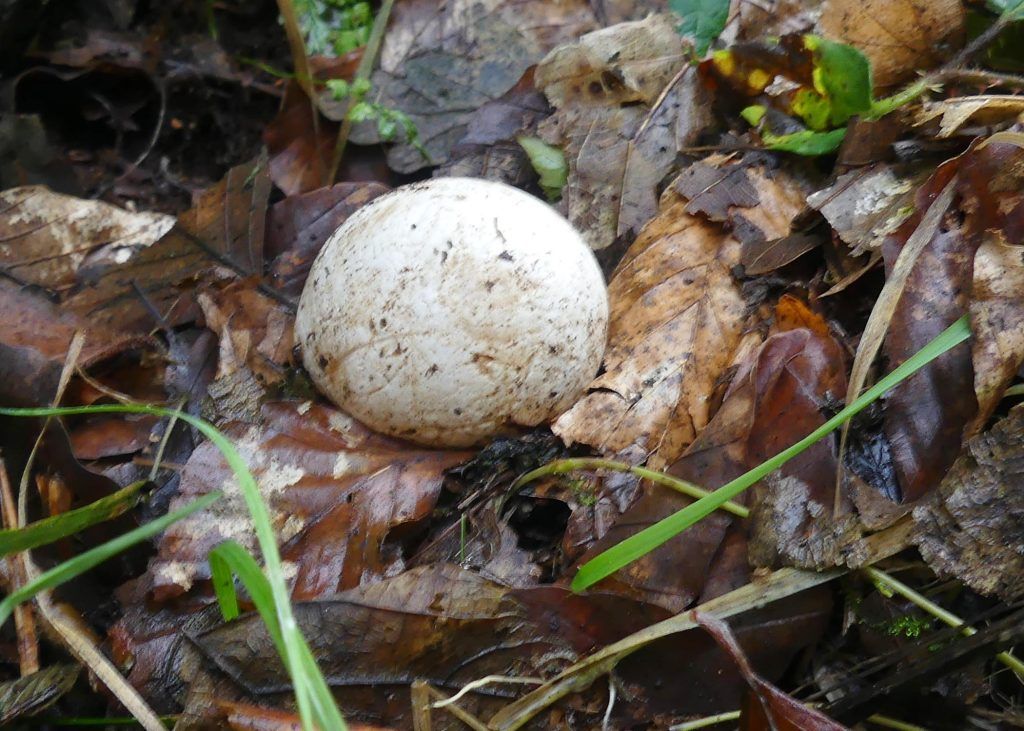
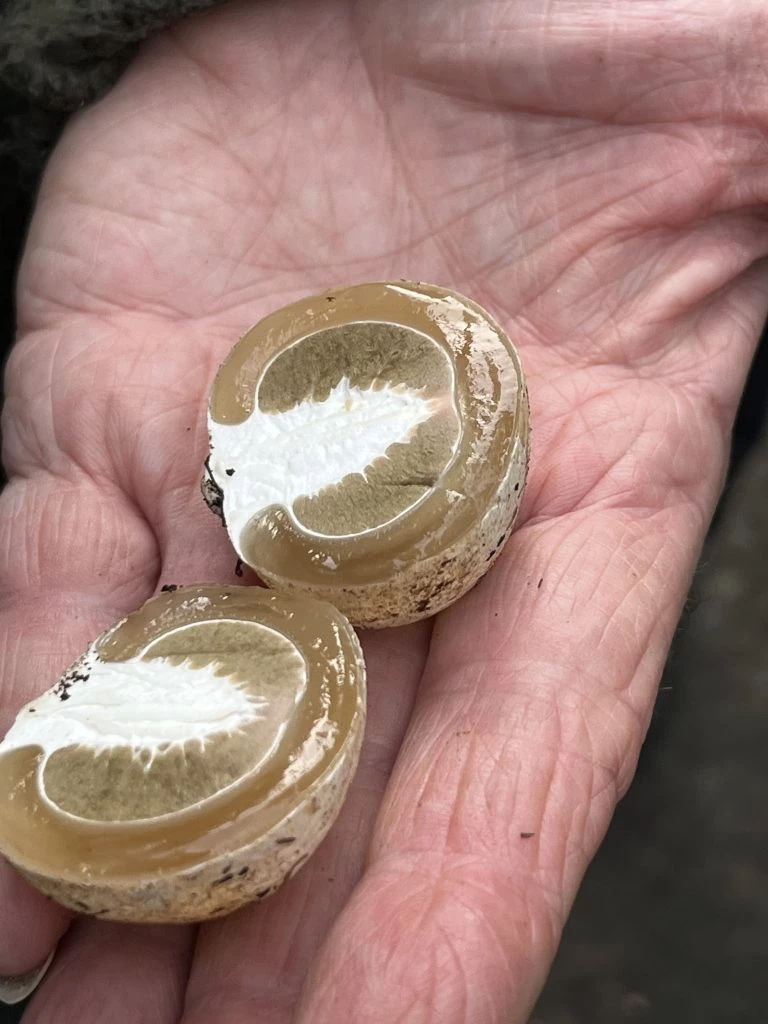
Our grand finale was finding several Stinkhorns in their egg stages, and so Andy was able to cut one in half to see its inside. A fascinating sight with the stinkhorn in embryonic form surrounded by protective jelly and water.
So a wonderful day. A big thank you to Andy, to Muff and Kerry for organising the trip and to all the drivers who transported us to Nidd Gorge.
Sonia Starbuck