(Only some of the outstanding plants from the long list made on the day are mentioned here; the full list with scientific names for Thornborough, plus a list of the highlights from Nosterfield, can be downloaded below.)
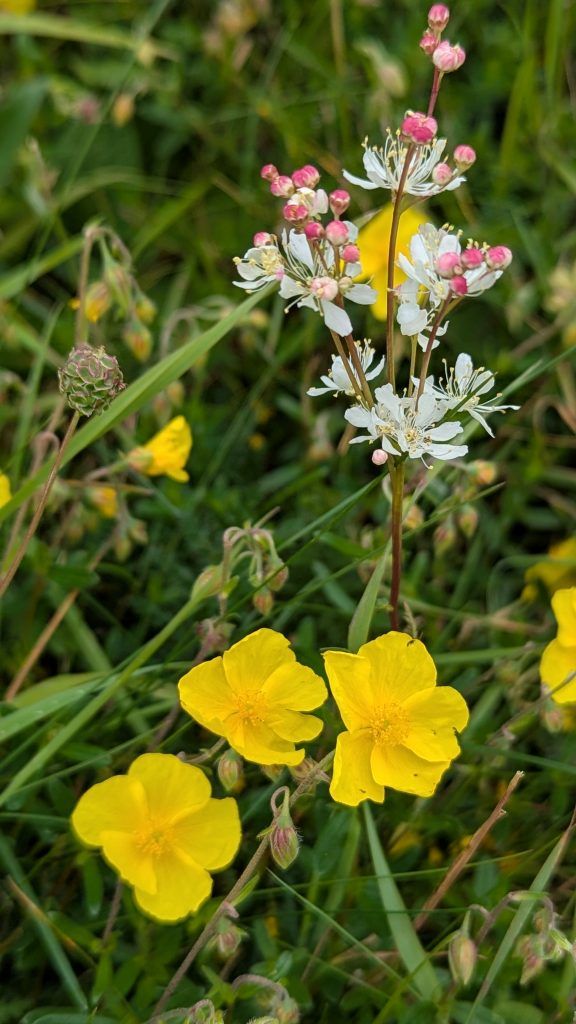
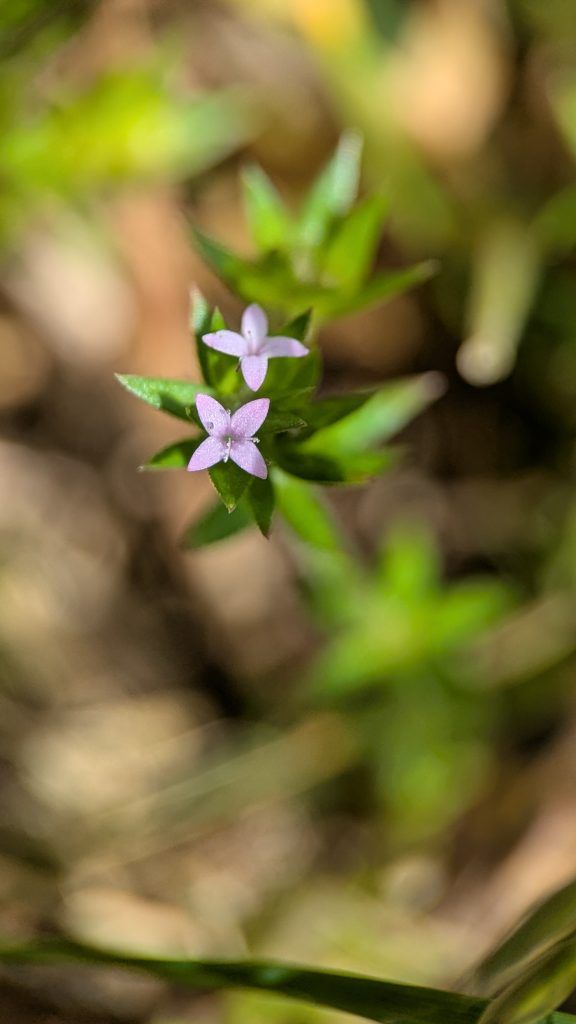
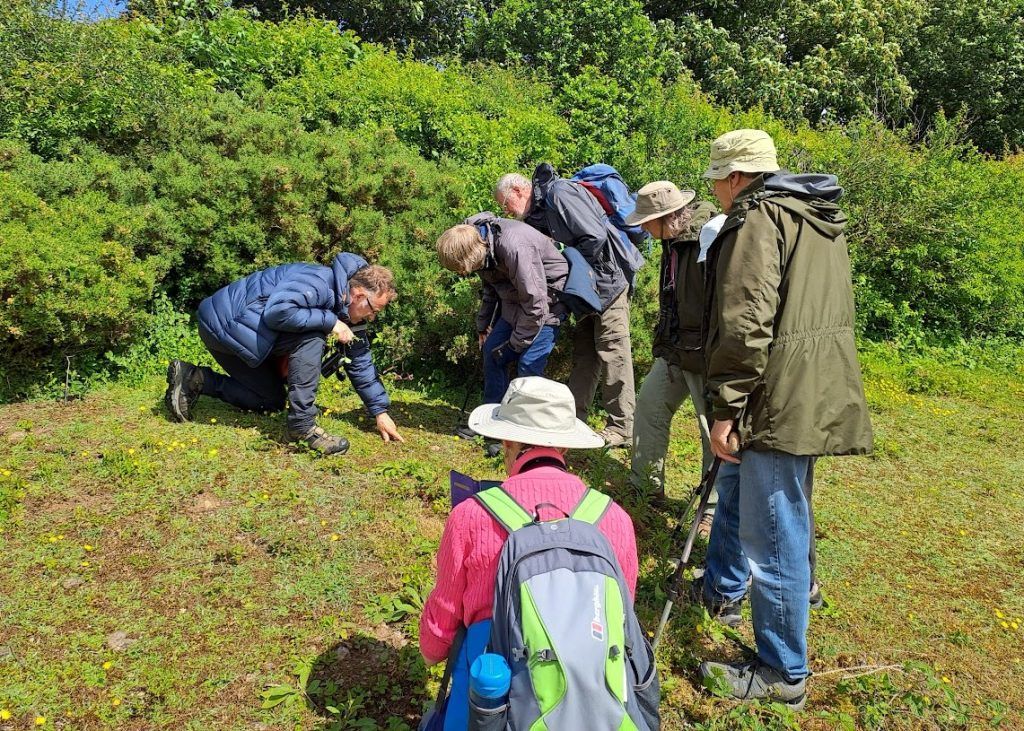
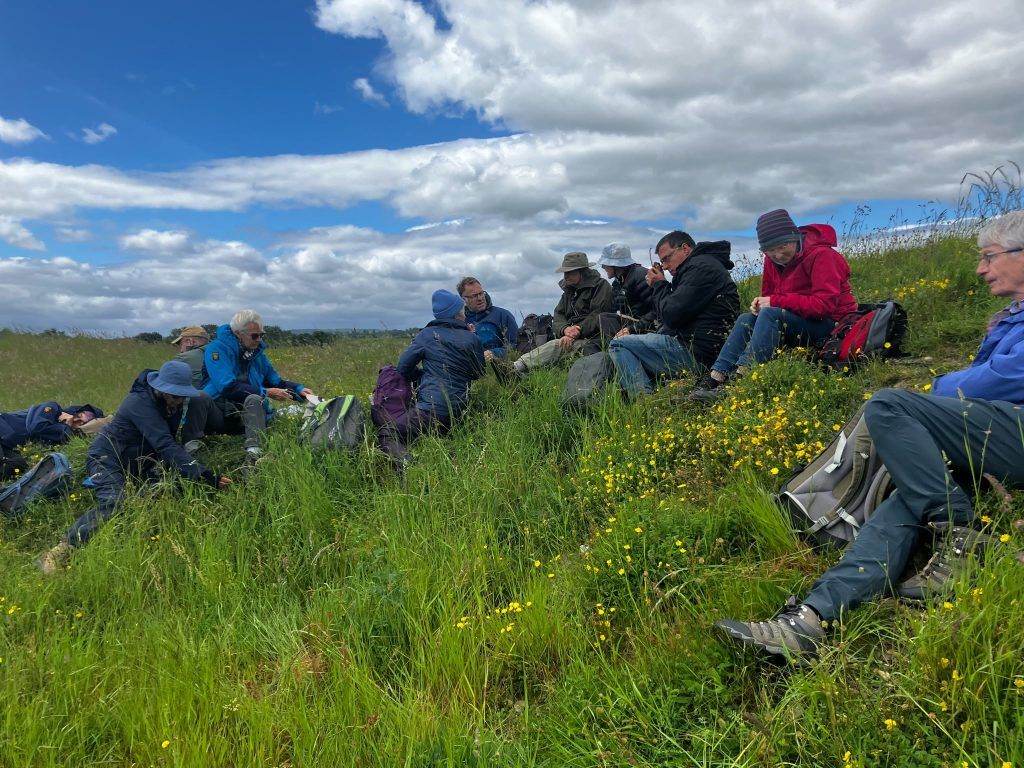
All the 17 members were depressingly well-wrapped-up for this midsummer meeting! The Thornborough Henges are an important archaeological site, the Stonehenge of the North – but we were here for the botany. Luckily as well as our leader Kevin, who knows every single plant in every stage of its growth, we had Pandora who was involved in the regeneration of the henges including replanting the historic species, so she knew how to go straight to the highlights. And so, we climbed the nearest mound to find a beautiful display of the uncommon Dropwort with its frothy pink-white flowers which reminded me of a raspberry Pavlova. But there was so much more! Many typical limestone grassland specialities were thick upon the ground, tiny pansies, Lady’s Bedstraw, Yellow Rattle, Creeping Cinquefoil, Meadow and Small Scabious – Kevin showed us how to identify Meadow Scabious when not flowering by two tiny hairs protruding from the end of the leaf. He also explained that Small Scabious has completely different basal leaves, which require searching deep at the base of the plant. We came upon a carpet of glowing yellow Rock-rose, and some tiny plants like Thyme-leaved Sandwort and Field Madder – the latter has a flower like a minute sharp-pointed pink star.
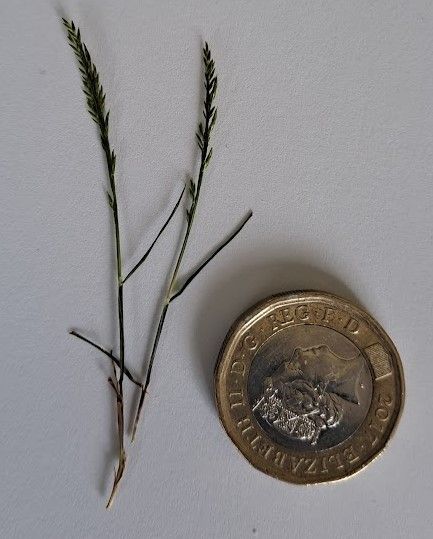
Kevin was slightly apologetic when the identification of grasses came up but he made them interesting and accessible with his ID tips, though the discrimination between Sheep’s and Red Fescue was somewhat daunting… One limestone speciality was Koeleria, ‘Crested Hair-grass’, with its grooved leaves and downy sheath. 4 different Oat-grasses were examined with distinguishing characteristics such as size, hairiness, colour and length of awns. Everyone’s favourite was Yellow Oat-grass, with its greenish gold sheen and ragged awns.
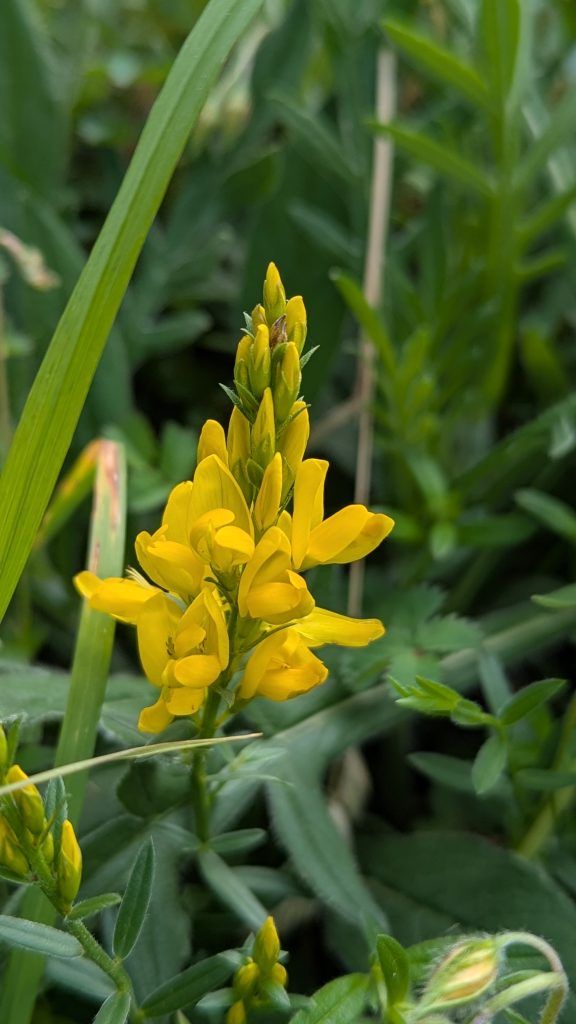
A final highlight – Pandora took us to the top of another hummock where a few plants of the rare Dyer’s Greenweed were glowing deep yellow among the Rock-rose.
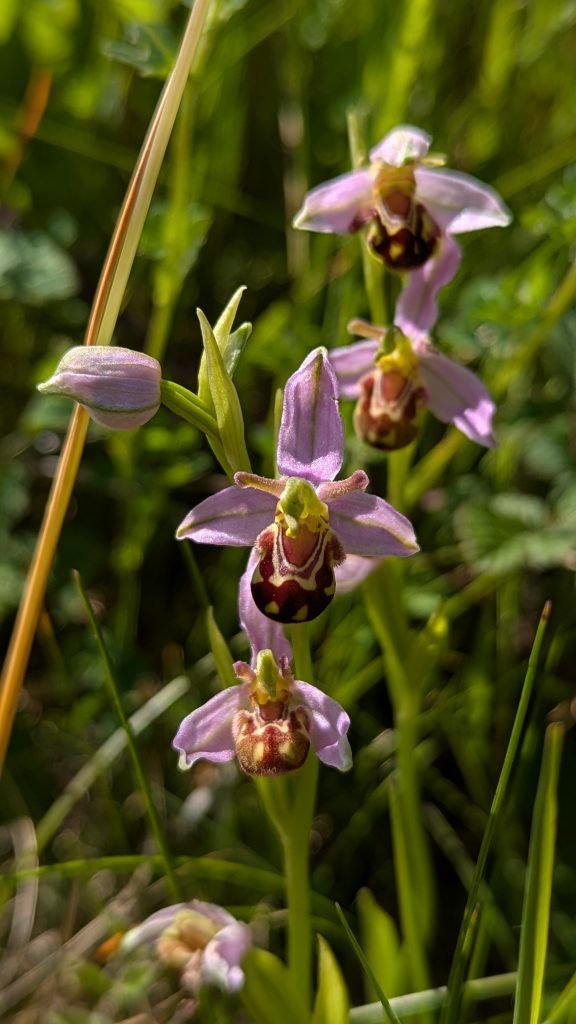
The sheltered side of a mound provided a respite from the wind for lunch, then we drove the short distance to Nosterfield. There were Bee Orchids waiting for us in the car park, then we strolled along the main path, which was banked by a wonderful array of plants. Again, only a few highlights can be mentioned here.
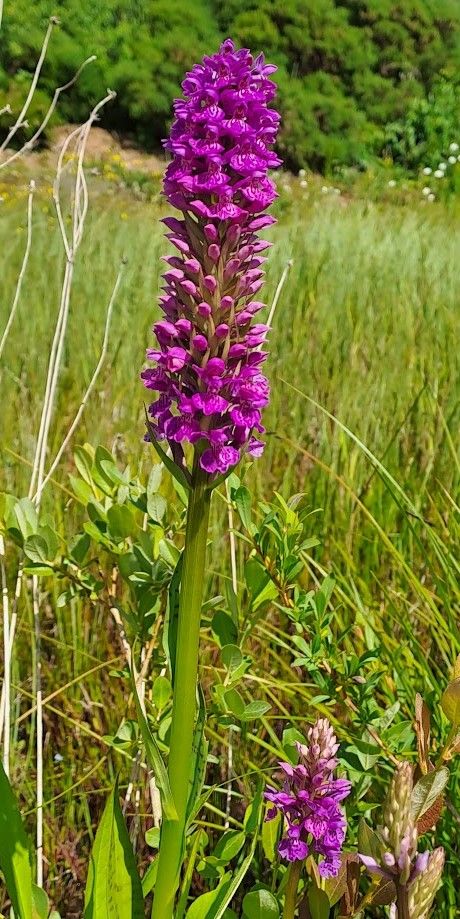
There was plenty of colour from Dog Daisies, Campions, Hawkbits and poppies. The ground was frequently covered with a carpet of Mouse-ear Hawkweed; its rosette habit with the many connecting runners was obviously stabilising the banks in sandy eroded areas. We struggled with Hypericums and Willowherbs and there was much discussion of hybrids. They seem to be a useful excuse for anything that doesn’t properly match its ID! Of particular interest was a large showy hybrid orchid whose flower spike showed a clear distinction between its two parents. A patch of Campions were attractively white with a pink blush, obviously a hybrid of Red and White. Kevin also talked about ‘apomixis’, here referring to Eyebrights, which spread by seed but the seeds are produced asexually, so that the offspring are clones of the parent. This leads to many slightly different forms of these plants which are not clearly distinct. We were in despair when Kevin told us there were more than 250 variants of the dandelion resulting from apomixis! Apparently some people make this a lifetime study…
Ploughman’s-spikenard was an interesting plant not often seen, apparently it was used as a poor man’s perfume. We came to a nice little pond and boggy area, with at least five species of sedge, plus a number of other interesting bog plants, the rare Greater Spearwort had in fact been planted. Kevin showed us the little Common Cudweed which many people had not seen before, and then found us a ridiculous seedling about the size of a peanut which was apparently a baby gorse bush! Also very small was Fern-grass, a delicate grass no more than 2 or 3 cm high which is often overlooked. We made our way, past many more Bee Orchids, to the final hide, with a good view of the waterbirds, many of which had chicks. Even the roof of the hide held surprises as there was plenty more cudweed growing there.
We made our way back, still picking up one or two more discoveries, until the final gate where Kevin pounced on an unusual variant of Thyme-leaved Sandwort Arenaria leptoclados, slenderer than the common species and with narrower straight-sided capsules. Altogether, a day of delights and discoveries! Many thanks to Kevin and Pandora, and to Jill Warwick for hosting us.
Report by Muff Upsall